Cairo
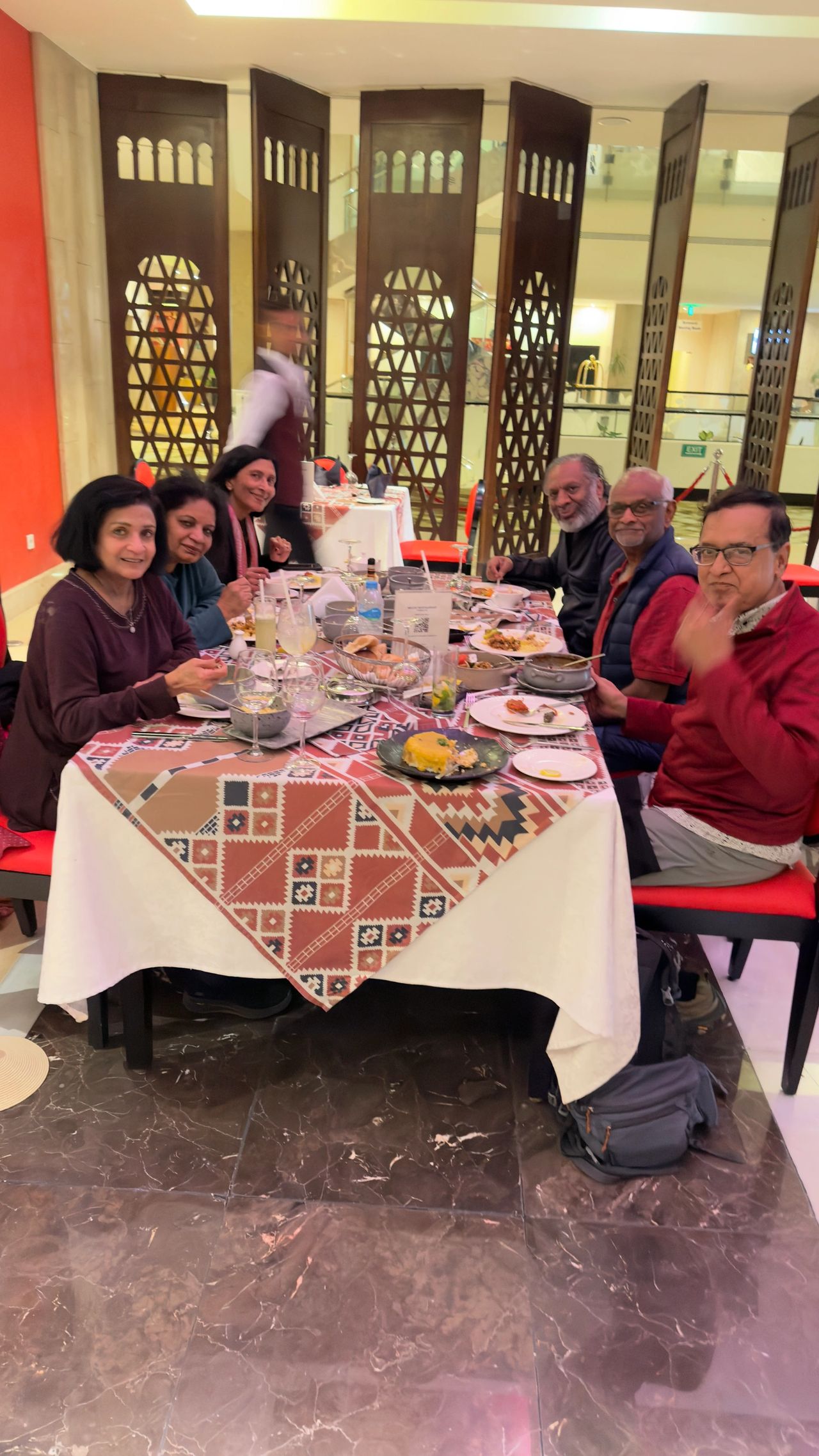
Cairo is the land of ancient pyramids, the Great Sphinx, and heat so intense it makes you wonder whether the Egyptians built everything purely for aesthetics—or to slow-roast tourists for eternity. Our journey began at ancient Memphis, Saqqara, and Giza, where we stood in awe before the pyramids of Khufu, Khafre, and Menkaure. That said, our stomachs were less reverent. That said, our stomachs were less reverent; they heard Kulfi, Kichari, and Manchurian instead (not exactly ancient Egyptian cuisine, but we’re nothing if not adaptable). We fed them and moved on.
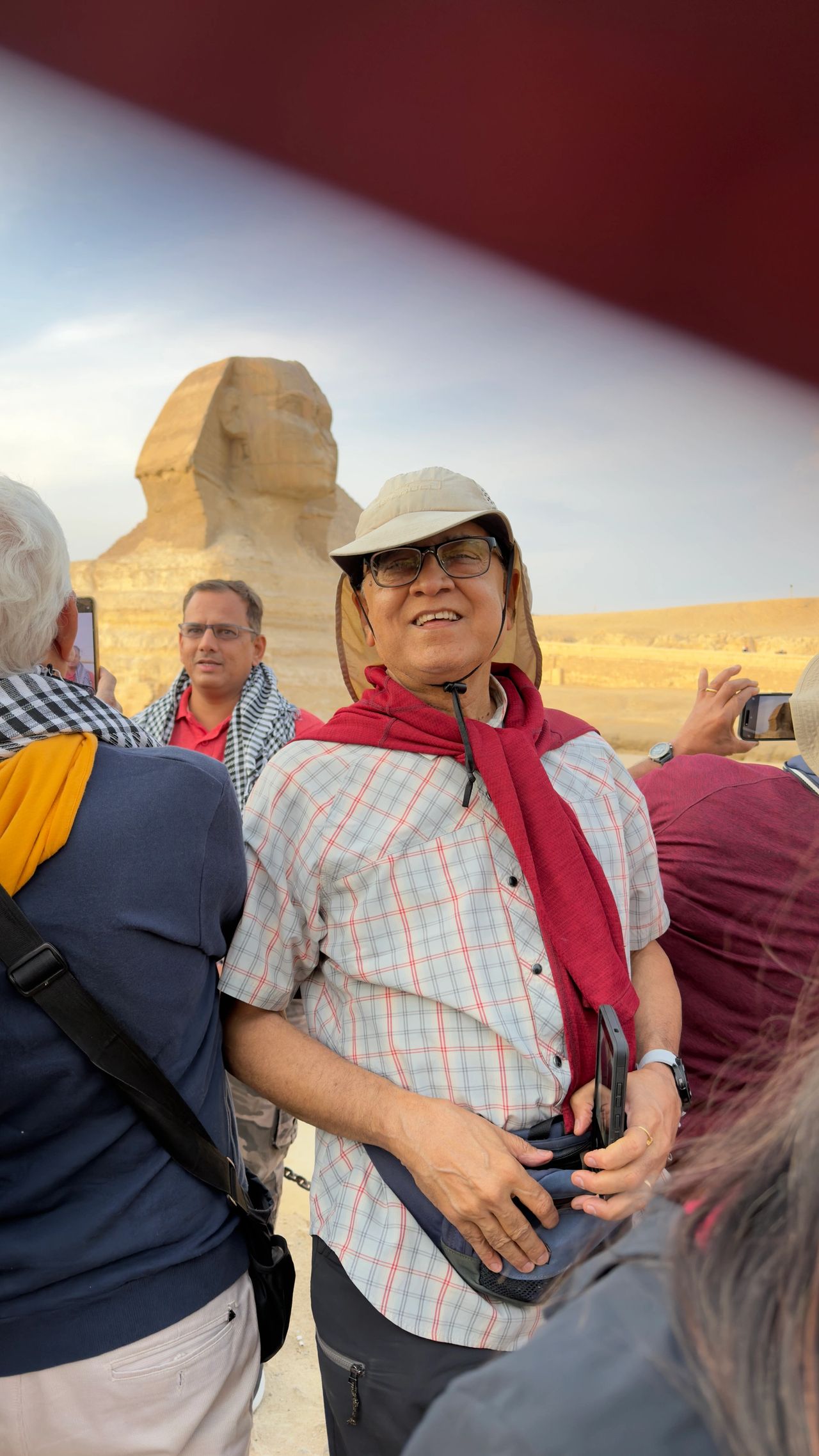
Next came the Sphinx, where we attempted the mandatory tourist photos. In our enthusiasm—and haste— creating a small gallery of accidental chimeras that pleased no one and confused everyone, including us.
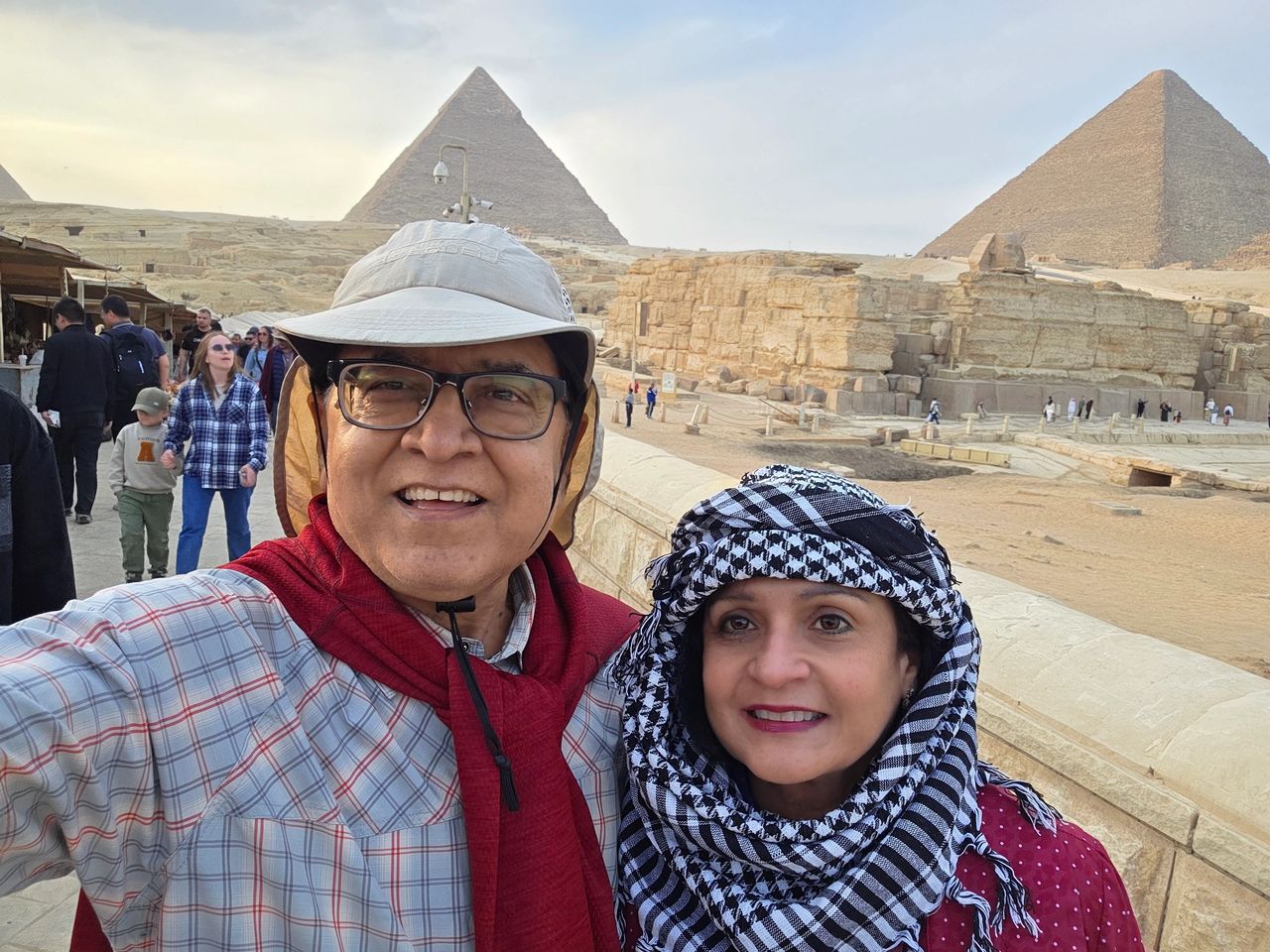
A local trader kindly tied a turban on my head. I arrived in Egypt as an Iyer and emerged as a Begum—royalty, apparently.
Alexandria
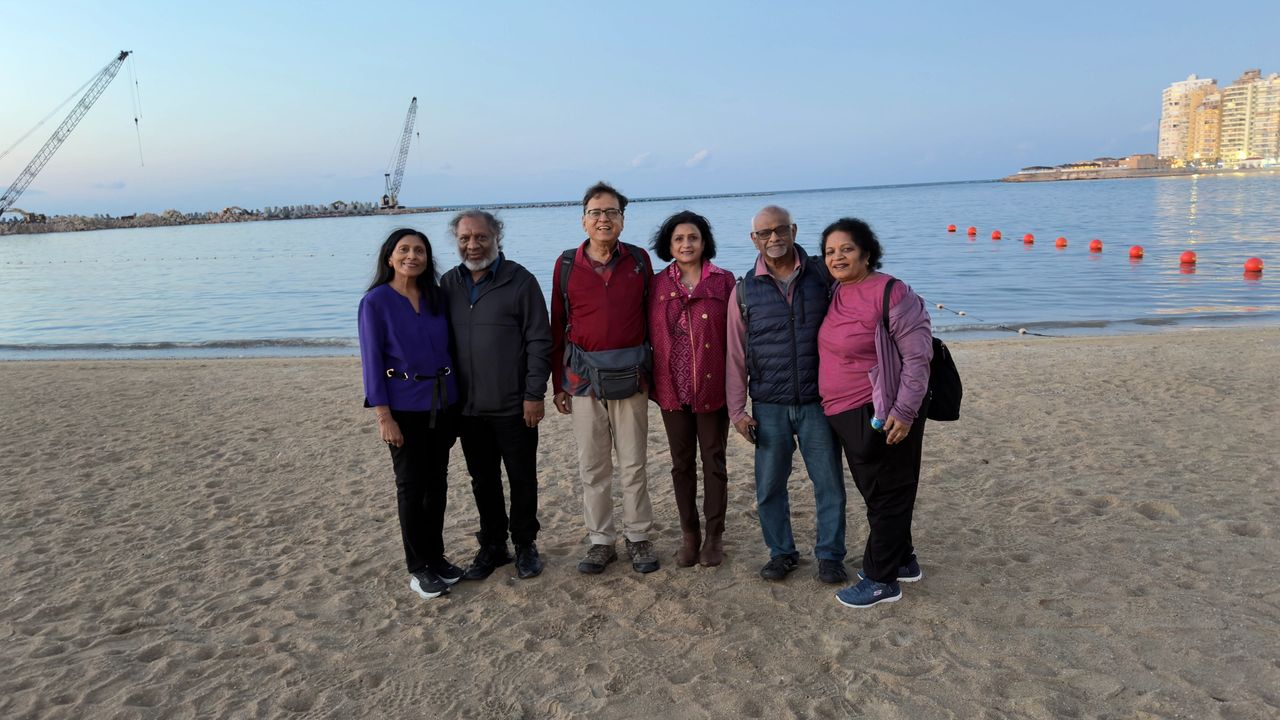
The Library of Alexandria was fascinating in a sleek, modern, decidedly not-ancient way. Then we visited the Citadel of Qaitbay, where I had my first unintentional van-door incident. While trying to open the window, I opened the door instead—not once, but twice. The driver calmly reached back and activated the child lock. At this point, I wasn’t offended. After all, we’d grown accustomed to our Cairo guide issuing military-style commands about where to stand, where to eat, and presumably how to breathe.
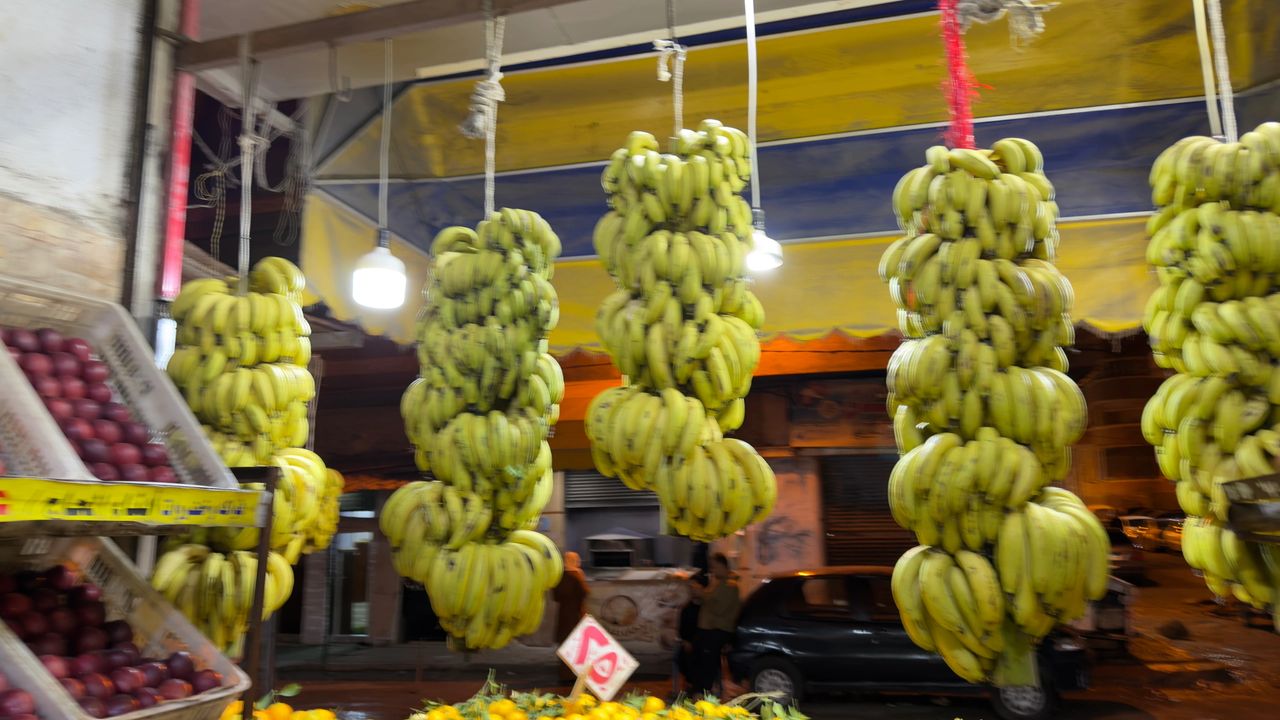
Later, Sridhar and I set out on a noble quest: finding a banana. We searched everywhere—shops selling spices, souvenirs, and everything under the sun except bananas. Finally, we found a store that sold only bananas. Did we buy any? Of course not. But the moment felt complete.
The following day, we visited Montazah Palace, which was as beautiful as the story of its last occupant was not. Then came the Catacombs of Kom El Shuqqafa, where we descended an ancient spiral staircase into a maze of tombs. The carvings were a bewildering mix of Roman, Greek, and Egyptian styles—like an ancient civilization potluck with an overly generous guest list.
The real adventure began with the overnight train to Aswan. Once aboard, we braved the shared toilet (spoiler: deeply unsettling). I climbed onto the top bunk with one foot on a trash can and the other on the windowsill—until I noticed a perfectly good ladder hiding underneath. But by then, dignity had already left the station. Meanwhile, my husband attempted to operate the window knobs as though they were light switches. We were clearly well-matched.
Aswan
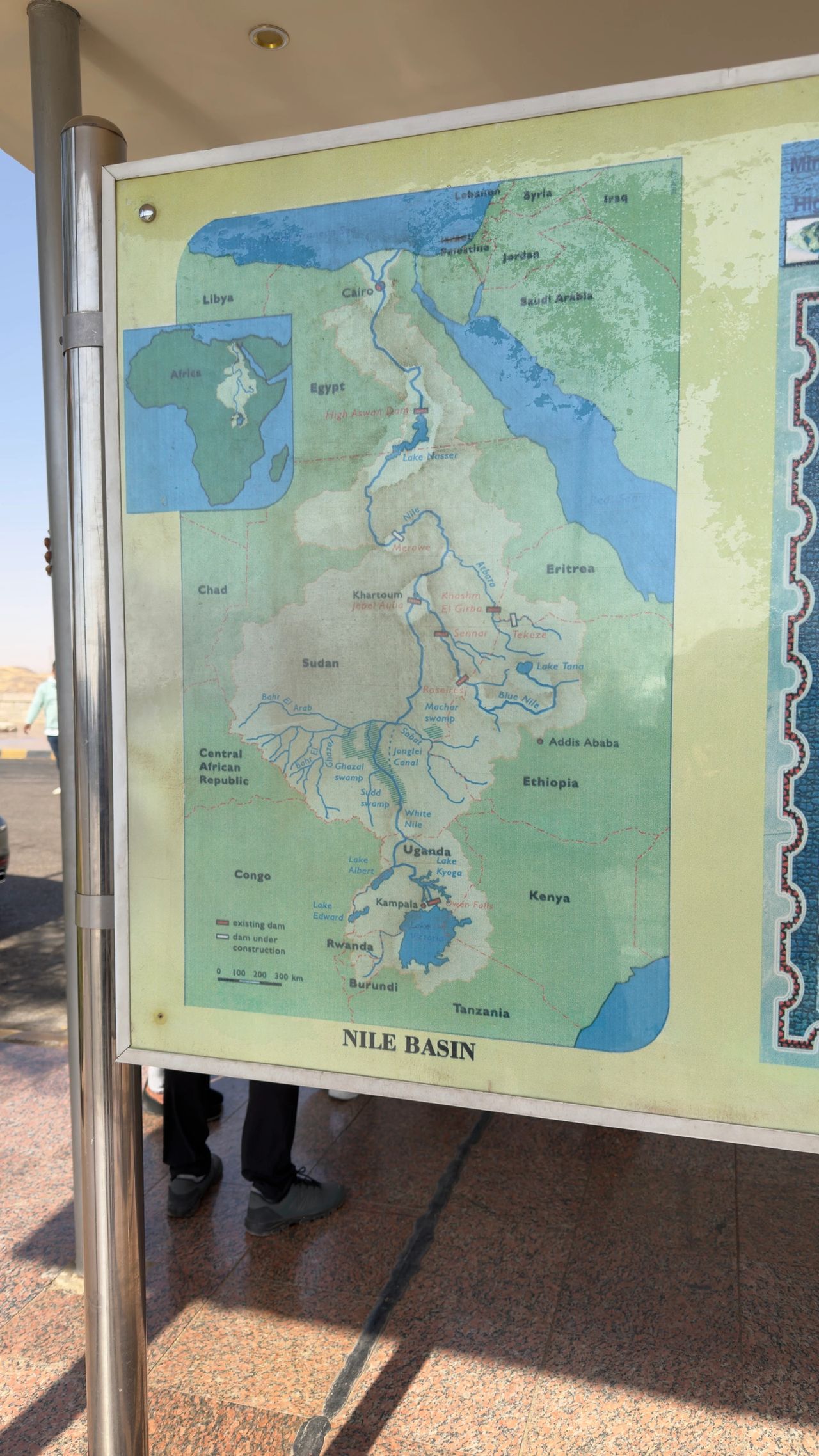
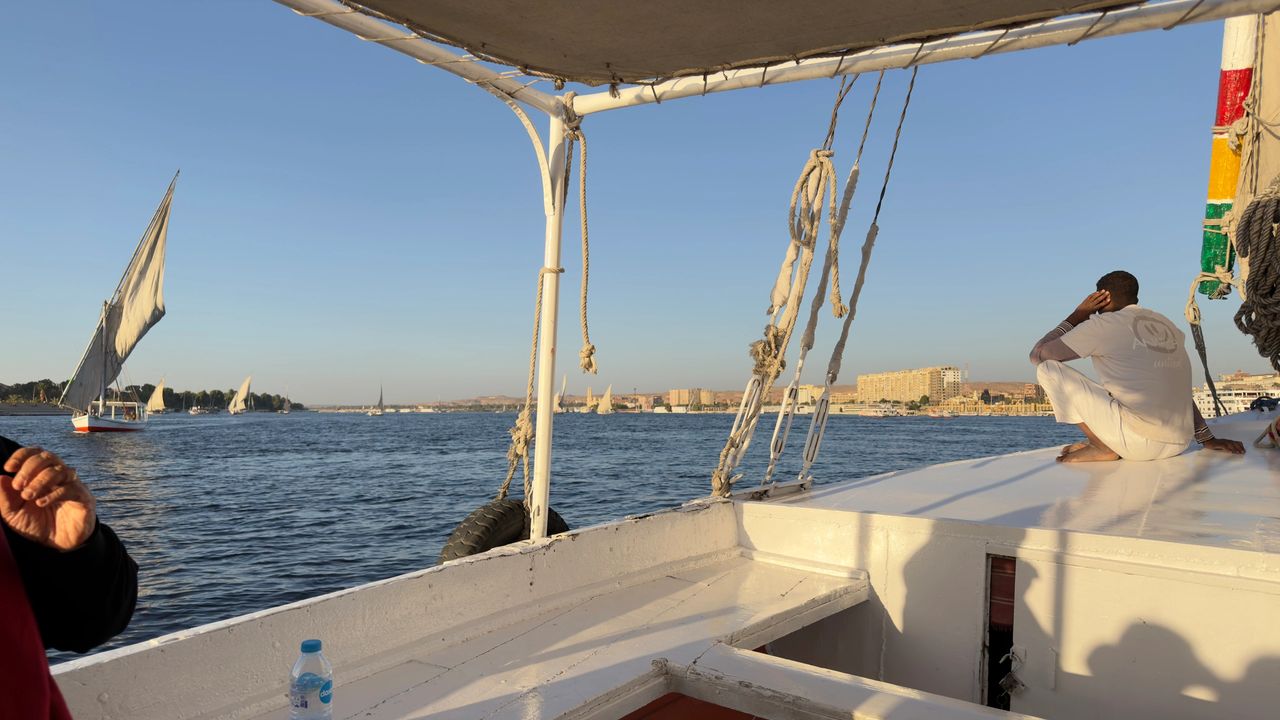
We arrived in Aswan, where we met our new guide, Diya. First stop: the Aswan Dam—undeniably impressive. Then came the Philae Temple, which UNESCO had relocated stone by painstaking stone. Stone by stone. Let that sink in. We ended the day with a serene sunset sail on the Nile, which almost made us forget the train ride.
Almost.
Still mildly traumatized by the train ride, I made a strategic life decision the next day: I would not wake up at an ungodly hour for the must-see Abu Simbel tour. Instead, I opted for a foot massage (which almost made me forget the train ride) and joined the group later for lunch aboard our Nile cruise.
Nile River Cruise
The Nile River Cruise felt like a floating museum. We explored sacred temples and contemplated the mysteries of King Tutankhamun, who felt as ancient and enigmatic as a Tyrannosaurus rex. King Tutankhamun, about whom we knew exactly as much as our guide had time to tell us, which was considerable, and which we retained for approximately one temple. In a Nubian village, we admired crocodiles is a sentence I never expected to write, and yet here we are. They were magnificent, motionless, and deeply unimpressed by us — which, after Cairo, felt familiar. We encountered camels who had absolutely no understanding of road safety. They charged at us with the confidence of creatures who had never heard the word “traffic.”
Luxor
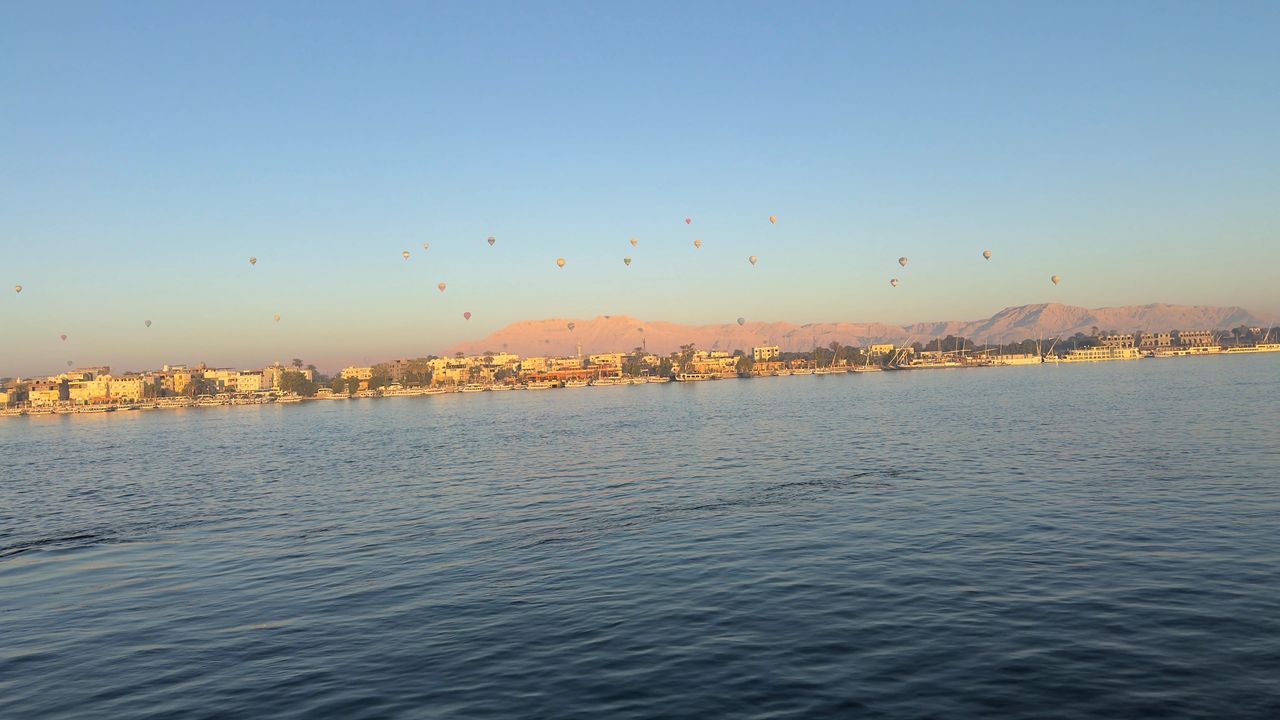
We sailed on to Luxor and visited the Valley of the Kings, which is more like Death Valley—albeit with fancier tombs. The heat was relentless, so I adopted a survival strategy: walking exclusively in my husband’s shadow. While others diligently visited every tomb on their ticket, I chose a café and watched the living Egyptians instead—far more colorful, even though the women appeared mummified in their layers of clothing.
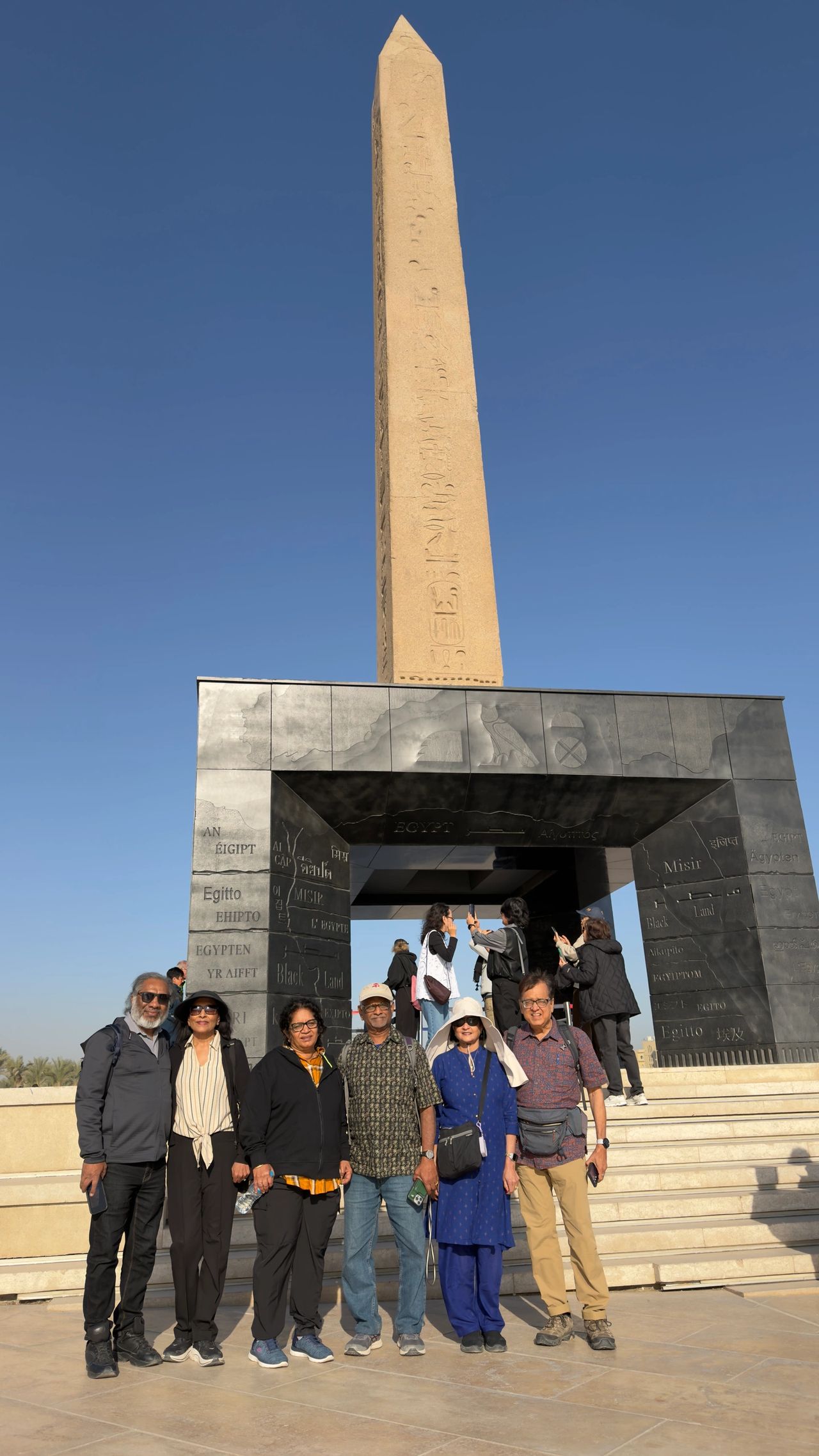
Next came Karnak Temple, where our friend Maha insisted the prayer calls from a mosque sounded like Carnatic ragas—Mayamalavagowla or Paras, to be precise. At Luxor Temple, we learned that an Ottoman ruler, Mohammed Ali, had gifted away one of its obelisks to a French king. It reminded us of the Tamil proverb: “Store coconut, take. Way Puliyaar cut.” Don’t ask—I’m still decoding it myself.
Cairo (Again)
Back in Cairo, we visited the Grand Egyptian Museum, the Citadel of Salah El-Din, and the Mohammed Ali Mosque. The day ended at Khan El Khalili Bazaar, where we spent an embarrassing amount of time hunting for a clean toilet while clutching our wallets like they were family heirlooms.
In the evening, we strolled along the Nile promenade, which turned out to be the grand finale of our endurance training. By the end of the day, our step count proudly stood at 19,000 steps—an achievement no one had asked for, but our feet will never forget.
Journey Home
The next day, we checked out and began our journey home. We arrived at Doha Airport, which—no exaggeration—felt larger than the city of Doha itself. After walking what must have been several thousand steps, I was convinced the airport was its own sovereign nation.
Another 15 hours later, we landed in Seattle, where the airport gate agents introduced us to a new sport: Gate Ping-Pong. We were instructed to go to the gate on the opposite side of the airport—only to be told, upon arrival, to return to the gate where we had started. At that point, we simply complied. Resistance felt pointless.
Conclusion
Exhausting? Absolutely. Worth it? Every single step — except every minute of that train ride. The feet have forgiven us. The stomach still asks about the bananas.