If Kashmir is called Paradise on Earth, then Ladakh is Paradise’s dramatic, slightly eccentric cousin who lives at 14,000 feet, drinks butter tea, and casually mentions that breathing is optional.
Known as Little Tibet, Ladakh is a beautiful blend of Tibetan culture, Buddhist monasteries, prayer flags, rugged mountains, and some of the friendliest people you’ll ever meet. It is also known as the Land of High Passes, which sounds romantic until you realize every pass involves your vehicle climbing into altitudes where your lungs begin filing formal complaints.
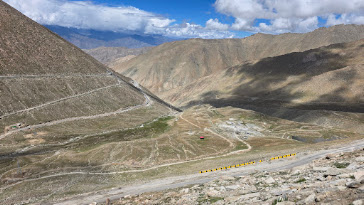
Over two days, we crossed some of Ladakh’s famous mountain passes: Chang La, Wari La, and Khardung La, the latter proudly advertising itself at 17,982 feet. At that elevation, even standing still feels like cardio.
In a region that has served as the backdrop for countless Bollywood movies, I had imagined myself recreating cinematic moments of romance and adventure. Instead, I found myself embracing an oxygen tank with a level of affection normally reserved for close relatives.
The Himalayas
As we drove through the barren mountains, our guide explained that these lands were once under the sea before the Indian tectonic plate crashed into Asia and pushed the Himalayas skyward.
This was exciting news because it finally explained where Himalayan salt comes from.
For millions of years, continents collided, mountains rose, and oceans disappeared so that I could eventually sprinkle pink crystals on avocado toast.
Nature works in mysterious ways.
The Camel and I Meet Again
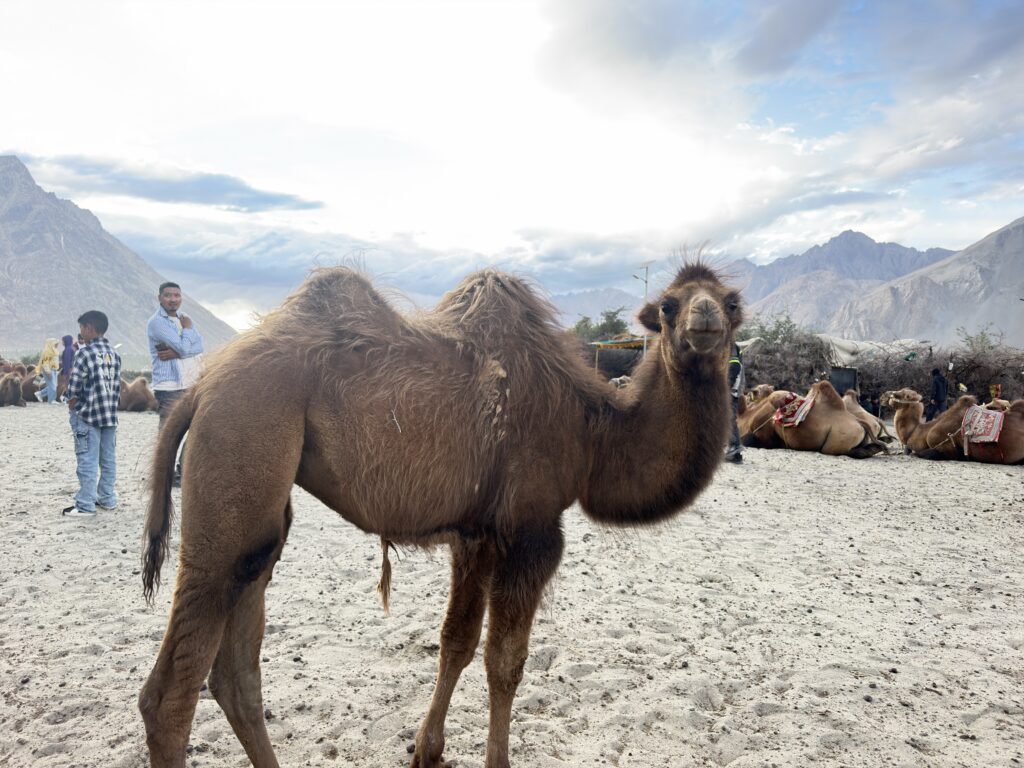
In Nubra Valley, we visited the famous dunes, a sight so unexpected that, for a moment, I wondered whether the driver had accidentally crossed into another country.
Waiting for us were the famous double-humped Bactrian camels.
Now, sensible people learn from experience. I am not ‘sensible people’.
Having previously survived a camel ride in Morocco and a pony ride in Kashmir, I decided another animal-assisted adventure was exactly what my vacation needed.
“If one hump wasn’t too bad, how difficult can two be?” was my foolish thought.
This logic ignored the obvious possibility that one hump was already one hump too many.
The camel rose to its feet in a series of dramatic lurches, redistributing my internal organs with the efficiency of a moving company.
As a beast of burden, it had spent its life carrying loads across harsh terrain. Unfortunately for it, on this particular day, the load was me. I had effectively become a burden to a beast of burden.
Becoming Temporarily Ladakhi
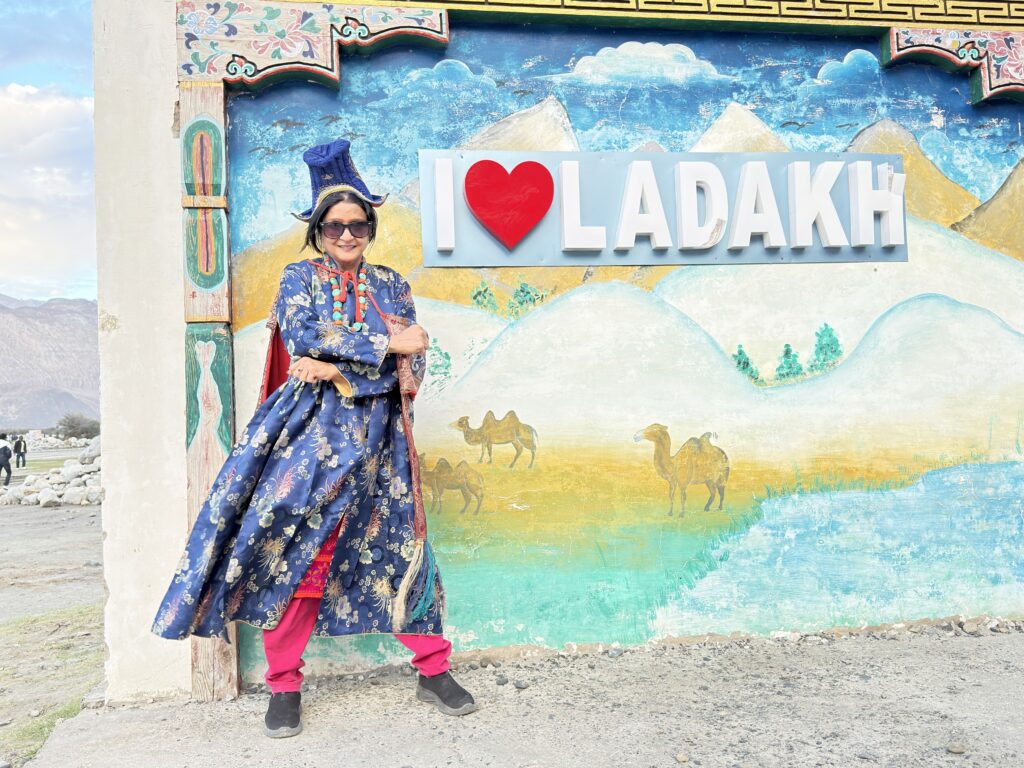
Later that evening, a local woman dressed me in traditional Ladakhi attire.
Within minutes, I had transformed from a tourist struggling for oxygen into a tourist struggling for oxygen in traditional clothing.
Someone put on music and encouraged me to try a Ladakhi dance. My performance can best be described as enthusiastic confusion. The locals were kind enough to smile encouragingly. Whether they were appreciating the dance or impressed that I remained upright at that altitude remains unclear.
Pangong Lake: Beauty and Breathlessness
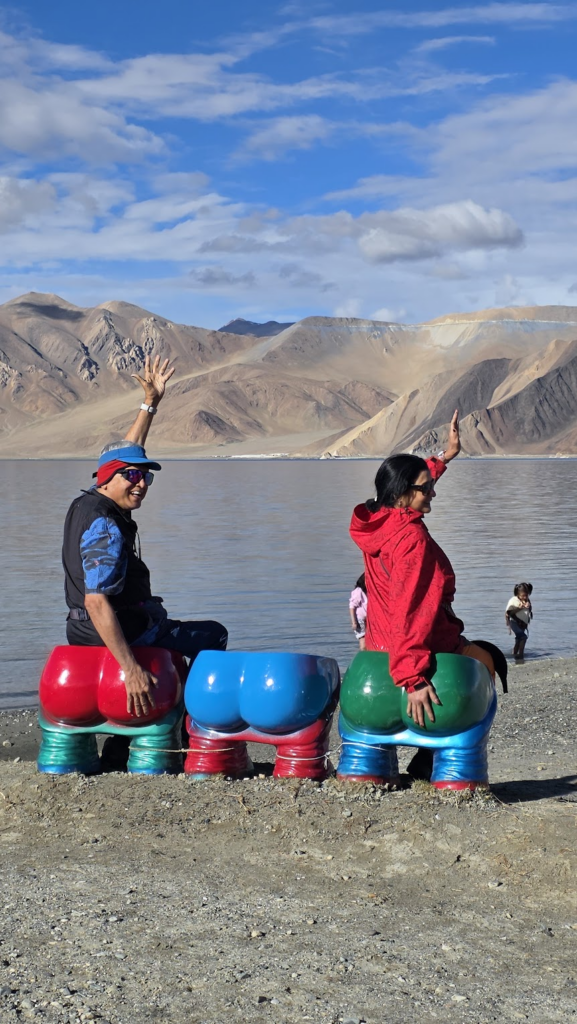
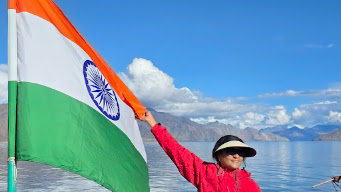
The next day brought us to Pangong Lake, one of the most spectacular places I have ever seen.
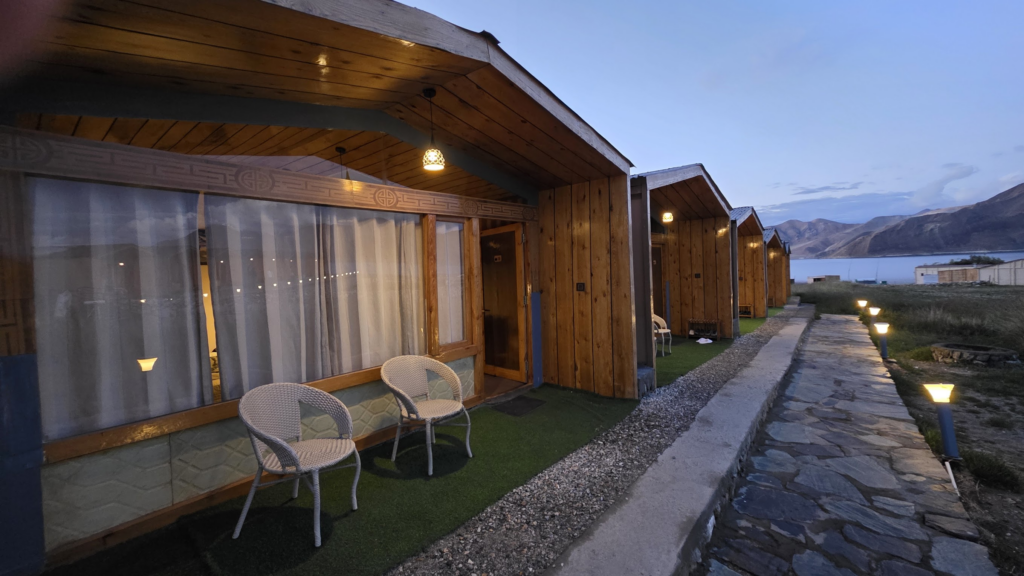
The lake stretched endlessly between mountains, changing shades of blue with every passing cloud. Our cabins sat right on the water’s edge. A few kilometres away lay the Chinese border, providing a constant reminder that while nations worry about territorial disputes, I was currently locked in a far more urgent battle with a flight of stairs.
Under normal circumstances, I would have spent hours peacefully admiring the scenery. These were not normal circumstances. Every activity at Pangong required careful planning.
Walk ten steps. Pause. Breathe. Reflect on mortality. Repeat.
The views were magnificent. The oxygen situation remained negotiable.
The Hot Water Crisis
The following morning, I woke at my usual hour of 5 a.m.
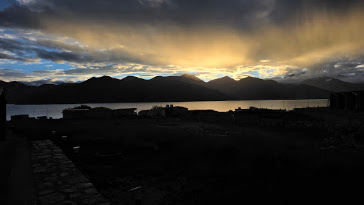
The world outside was peaceful. The lake was serene. The mountains glowed softly in the dawn light. There was no hot water!
Suddenly none of those other details seemed important. Wrapped in a towel and fueled by righteous indignation, I began calling every number listed in the cabin directory. Nobody answered. I called again. Still nothing. At this point, reason abandoned me. I started dialing random numbers. Eventually a sleepy voice answered. I launched immediately into a detailed explanation of my situation.
I was cold. I was in a towel. I required hot water. I required it now!
The man listened politely. Then apologized. Then said, rather uncertainly, “Ma’am… I’m a guest here too.” Apparently I had reached Cabin #9.
There was a long silence. Then he woke up fully and shouted back: “Wait… are you sure there’s no hot water? Who should we call?”
Just like that, I had accidentally recruited a stranger into my plumbing crisis. I hope he eventually got his shower.
The Molecule We Owe Everything To
By the end of Ladakh, I had developed a profound appreciation for oxygen. You don’t really think about it much at sea level. It’s always there, quietly doing its job.
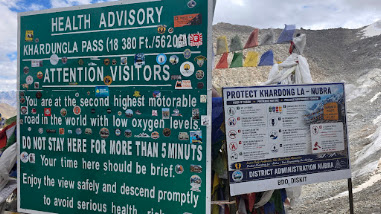
In Ladakh, oxygen becomes the star of the show. People speak about it with reverence. Hotels mention it proudly and offer oxygen tanks with individual sterilized masks. Tourists seek it eagerly.
The passes were breathtaking. Sometimes quite literally. While Bollywood may have found romance in Ladakh, I left with a different great love story:
Me and the oxygen tank. It was the most stable relationship I had all trip.
Chaos, Documented
Comments
2 responses to “Ladakh: The Land of High Passes”
You had a fun
I also want to travel
Whom should i contact
Glad that u survived😱
Was it necessary to do such a dangerous trip there?