Long before I earned my MS in Computer Science, I was already a hopeless devotee of Robert Noyce—the “Mayor of Silicon Valley,” the man whose charisma and brilliance became the stuff of legend in PBS documentaries like The History of Silicon Valley. While my friends fantasised about movie stars, I was starstruck by the men who gave birth to an industry.
It began, improbably, in the banquet office of the Taj Hotel—my very first job. It was 1983. Between scheduling celebrity galas and lugging banquet folders across polished marble floors, I was that lone, unapologetic nerd solving the Rubik’s Cube at my desk and poring over any book I could find on “how to build your own microprocessor.”
I had just completed my Datamatics course in COBOL, and after my first memorable encounter with punch cards, something clicked. I had to understand where it all started—how those mysterious bits and bytes transformed into the chips that were quietly reshaping the world.
Of course, this obsession didn’t quite align with my other life: doing stage runs and still shoots as a model. While my posse of glamorous friends compared lighting angles and hair stylists, I was fretting about reviving the left cheek that had been scorched by a reflective umbrella light—and secretly daydreaming about owning an 8088 chip.
Yes, a chip. The thing I pined for. The thing that was beyond my reach.
Brushes with Legends
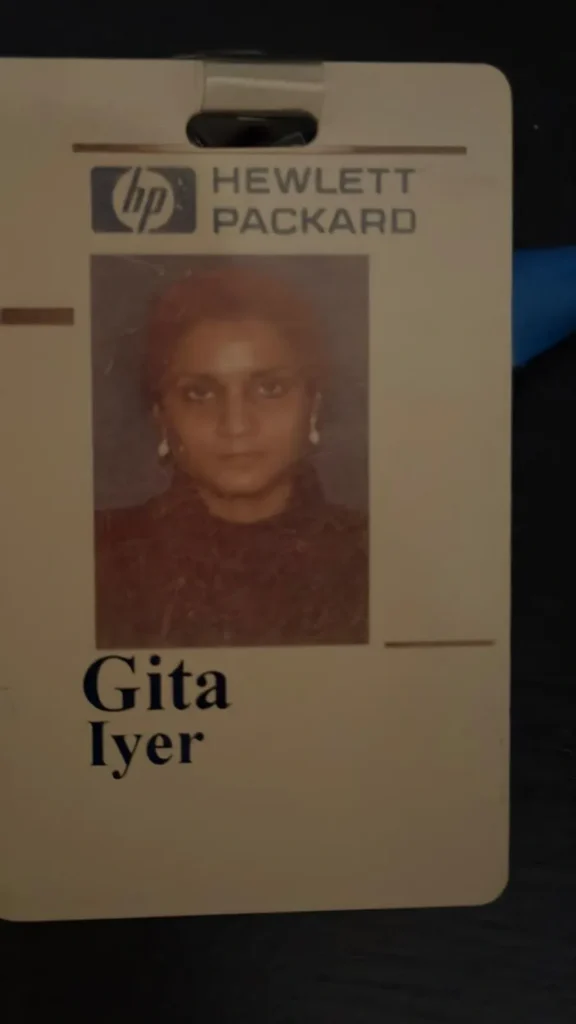
Life, in its charming unpredictability, eventually placed me face-to-face with two titans: Bill Hewlett and Dave Packard.
In the late ’80s, Bill would often stroll through HP Roseville—no entourage, no pomp—just a genial elder with a warm smile passing by the manufacturing line. The lobby of R3 had a giant photo of Bill and Dave, iconic and reassuring, as if watching over every engineer and every experiment.
Not long after I joined HP—still wide-eyed, still feeling like an imposter among engineers with far more experience—I found myself living one of those “how did I end up here?” moments that stay with you forever. In my very first year, I was asked to help present a project briefing to Bill Hewlett and Dave Packard themselves.
Yes—the Bill and Dave.
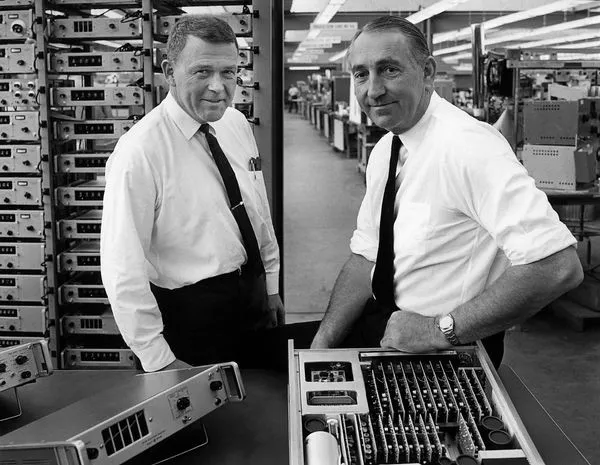
I remember standing in the conference room in Palo Alto, palms damp, rehearsing my lines under my breath while the senior managers acted far calmer than they felt. When Bill and Dave walked in, it wasn’t the awe-inspiring presence of corporate legends that struck me—it was their gentleness. Bill had that unmistakable warm, genial smile, the same one that would later light up the manufacturing line when he dropped by unannounced. Dave carried himself with quiet authority, but an ease that made even nervous young presenters like me feel seen and respected.
When my turn came, my voice somehow steadied. They listened—really listened—asked thoughtful questions, and nodded as if my small contribution mattered. I walked out of that room changed. It wasn’t just that I had met them; it was that these giants of American innovation had treated me as an equal participant in the conversation.
That moment—my first real brush with Silicon Valley greatness—became a quiet compass point for everything that followed.
Those were the years when Silicon Valley felt like a frontier—exactly as the PBS films depicted it—scrappy, brilliantly chaotic, and filled with people who genuinely believed they were building the future. And they were.
The Valley became a magnet for talent from around the world, including India. There used to be a joke that applying to Intel or Hewlett-Packard required selecting your “gothram” in a drop-down box of the application form. Some joked that parking-lot aerial shots looked more Indian than India itself—moustaches, turbans, and all.
The Reunion That Merged Past and Present
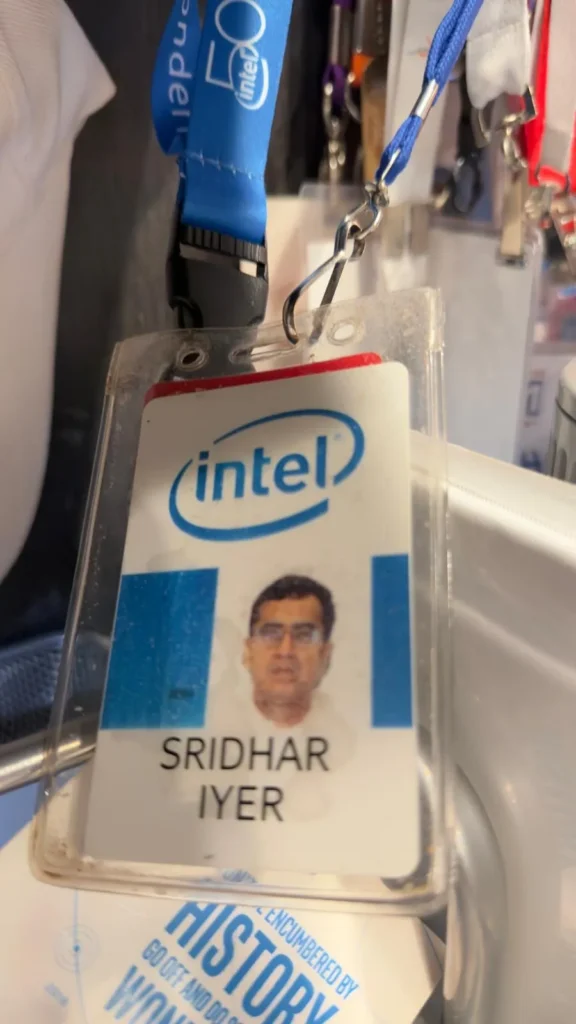
Years later came Intel’s 20th-year reunion—complete with Michael McDonald singing Still the One, and an unforgettable moment involving someone leaping out of a bunny suit. Events were held across three locations simultaneously, featuring Gordon Moore, Andy Grove, and Bob Noyce.
I attended as an HP employee, as the spouse of an Intel employee who held an early WWID. Incidentally, at our very first meeting, I had instantly elevated him several notches because he’d once “been in the same elevator as Bob Noyce.” That alone made him royalty in my book.
So when the reunion came around—and Noyce leapt out of a bunny suit- it felt almost surreal that I finally came face-to-face with the man I had idolised since my COBOL-and-punch-card days.
At our table was an unopened bottle of champagne. Heart pounding, I walked up to him and asked if he would autograph it. He smiled that warm, easy smile and signed the bottle without a moment’s hesitation.
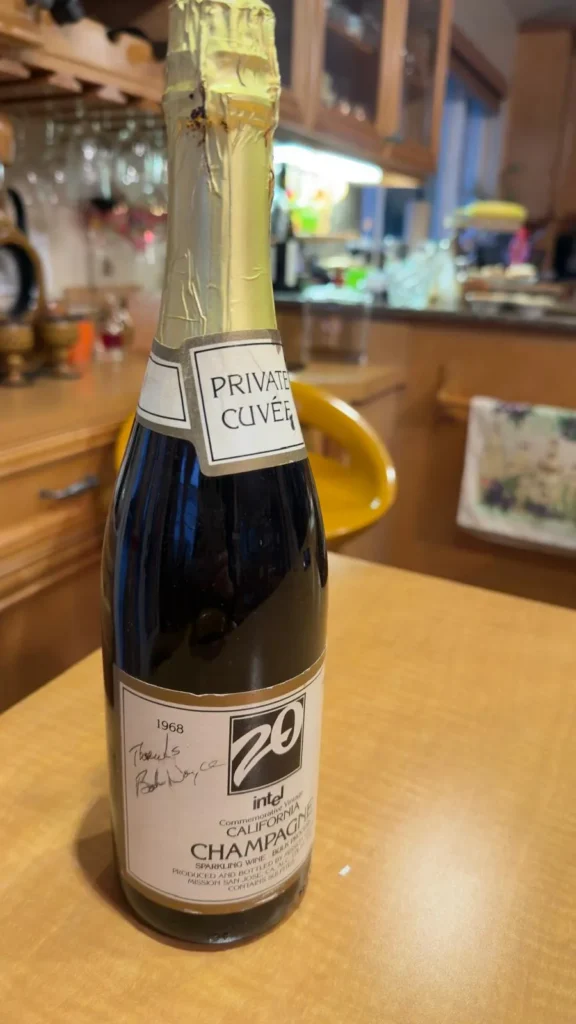
I held it close and sighed, half-joking and half-reverent,
“I will never drink it now.”
He laughed and said something I will never forget:
“Go ahead—drink it. I’ll give you another one next year.”
A year and a half later, he was gone.
That bottle—still untouched—sits in our home to this day.
A relic of a fleeting moment with a man who shaped not just a company, not just an industry, but the very rhythm of the modern world.
And in a way, our own little family became “Intel Inside-Out”—a twist on the famous jingle, Intel Inside—living, breathing, and laughing in the orbit of the silicon dream he helped ignite.
The Men Who Built a Dream
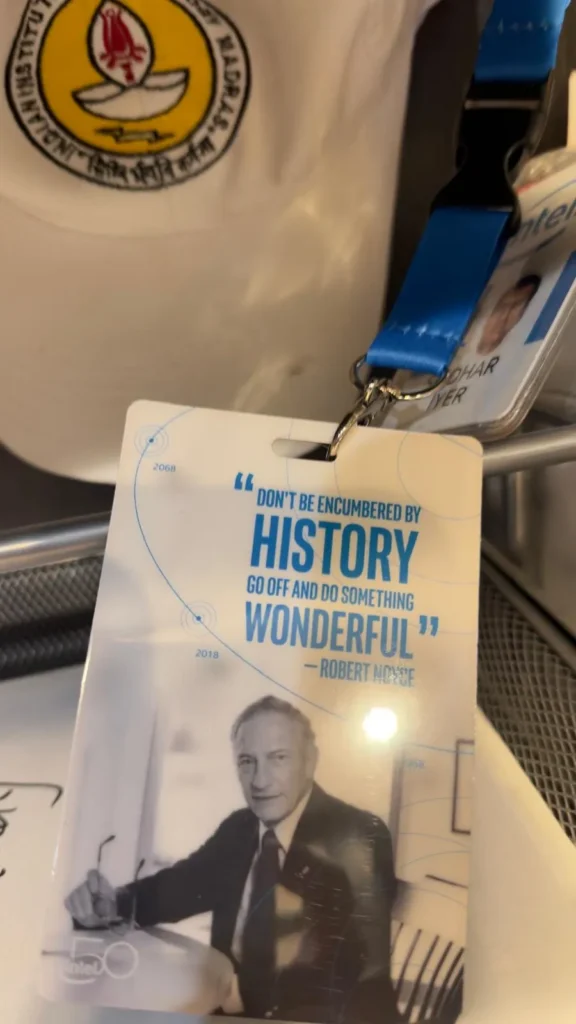
Bob Noyce, Gordon Moore, and Andy Grove were not just founders of a company—they were architects of an age. PBS documentaries often quote Gordon Moore’s iconic optimism, Andy Grove’s gritty realism, and Noyce’s visionary warmth. Together, they created not only the integrated circuit and the modern microprocessor but also a corridor of opportunity that welcomed highly intelligent immigrants from all over the world—including people like me.
Grove himself, famously an immigrant who arrived in America with nothing, once said:
“A corporation is a living organism; it has to continue to shed its skin.”
And Silicon Valley, thanks to pioneers like him, kept regenerating—powered by diversity, ambition, and relentless curiosity.
Bob Noyce epitomised a version of America that believed fiercely in merit and had little patience for prejudice. Coming so soon after the era of civil rights upheaval, he championed fairness, intellect, and openness. He would likely be pained to see the resurgence of the very divides he spent his life pushing against.
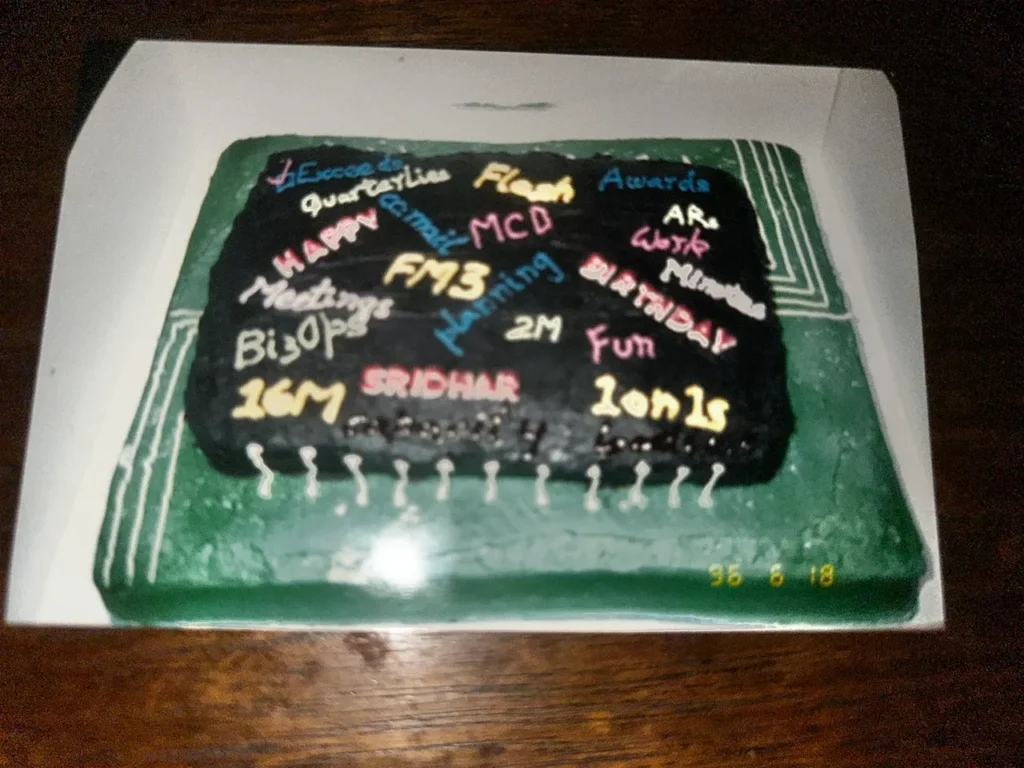
One of my favourite memories from those years was far more personal—one that still makes me smile every time I think of it. For my husband’s birthday, I had baked
a cake in the shape of a microchip, complete with piped “leads” and icing that looked like etched circuits. It was my loving, slightly nerdy tribute to the world we both inhabited, and to the man who shared that world with me.
Coming Full Circle
When I finally got the chance to work at Intel—after what I jokingly refer to as surviving HP’s “Badra” Carly—I walked into the Robert Noyce Building with a quiet sense of awe. The framed photos, the hallways humming with engineering energy, the legacy in the very air—it felt like stepping into the dreams I had as a young woman in Madras, India.
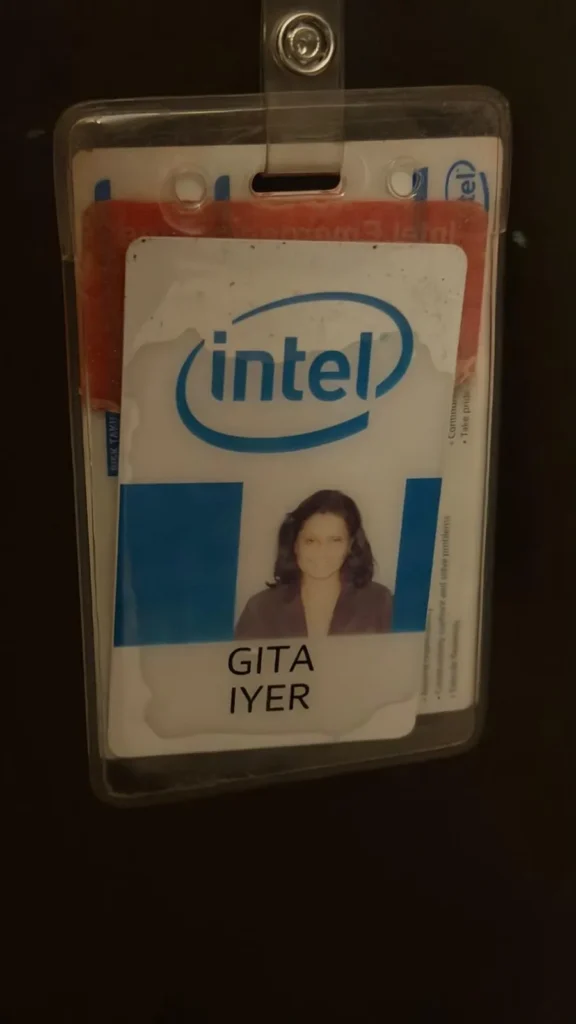
From the Taj banquets office to the heart of Silicon Valley, from COBOL punch cards to microprocessors, from modelling lights to the glow of semiconductor fabs—my journey has always been guided by the giants I admired.
I was never just chasing a career.
I was chasing the spirit of people like Noyce, Moore, Grove, Hewlett and Packard—men who proved that bold ideas, curiosity, and kindness can literally change the world. And every time I think back to that 8088 chip I longed for, I smile. We lived through an era when technology grew up alongside us—when we went from feeding programs into machines with floppy disks, to guarding our precious megabytes, to watching in disbelief as terabytes shrank onto micro-sized drives you could lose in a purse pocket.
Our children grew up with that evolution, too. Before they were even a year old, their tiny fingers were already tapping away at Duck ABC and Donald 123 on our early computers—learning their letters and numbers long before they learned to walk steadily. I sometimes think the jingles from those games were the lullabies of that generation.
Watching the technology transform while our babies learned and laughed through it all feels like one of the great privileges of having lived in the heart of Silicon Valley’s golden years.
And every time I think back to that 8088 chip I longed for, I smile.
Because in some small way, I eventually found my place in the world they imagined.
Robert Noyce: https://en.wikipedia.org/wiki/Robert_Noyce
Intel Inside: https://www.youtube.com/watch?v=meih1FIRgGU
PBS, History of Silicon Valley: https://www.pbs.org/wgbh/americanexperience/films/silicon/
Intel’s 8086 microprocessor became known to the world at large starting in 1978, when it was introduced, but truly exploded into mainstream consciousness when IBM chose the related 8088 (a cheaper 8-bit version) for its first personal computer (PC) in 1981, igniting the PC revolution and establishing the x86 architecture as a standard. Key Milestones:
- 1978: Intel releases the 16-bit 8086, beginning the legendary x86 family.
- 1981: IBM uses the 8088 (with an 8-bit external bus) in the original IBM PC, making the 8086 architecture the foundation for personal computing.
- Post-1981: The massive success of the IBM PC and its clones created huge demand, cementing the 8086’s (and its descendants’) dominance in the market.