November 6, 2025|Deep Thoughts
From the first clash of swords to the blast of modern warfare, humanity has always turned to music to make sense of violence and to dream of peace. Across continents and centuries, songs have become both the cries of the wounded and the prayers of the hopeful. Whether in the driving rhythm of rock and roll or the spiritual depth of devotional chants, music has persistently stood as a moral compass against the chaos of war.
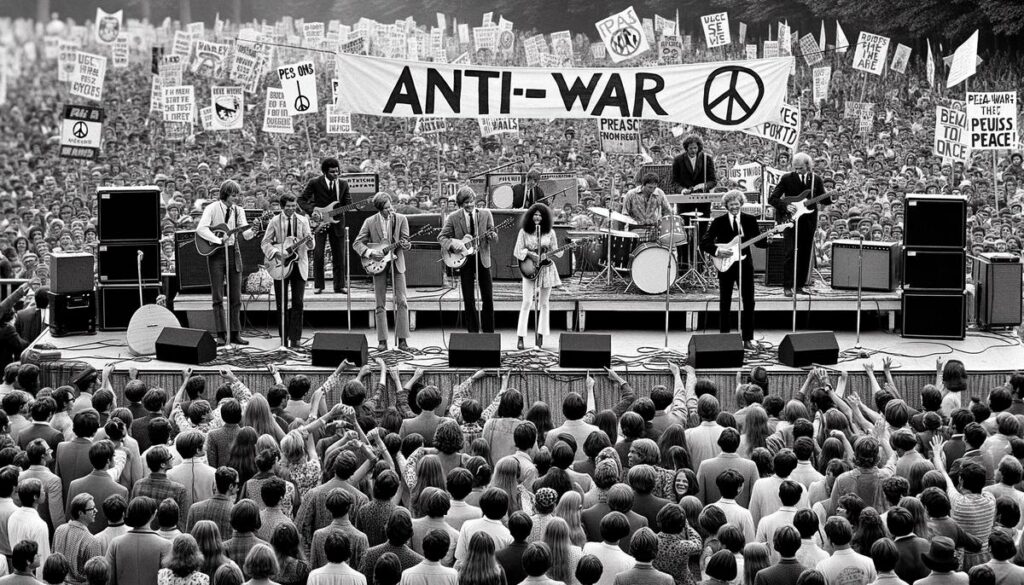
Echoes of Battle and the Voice of Protest
The tension between war and peace has long inspired artists. Alfred, Lord Tennyson’s poem “The Charge of the Light Brigade” immortalized the courage—and futility—of soldiers charging into near-certain death. A century later, musicians transformed that same spirit into protest and reflection. Dire Straits’ “Ride Across the River” by Mark Knopfler paints the life of a soldier haunted by the very battles he fights, his guitar weeping where words fail. It is no longer the sound of victory but of conscience—the human cost beneath the heroism.
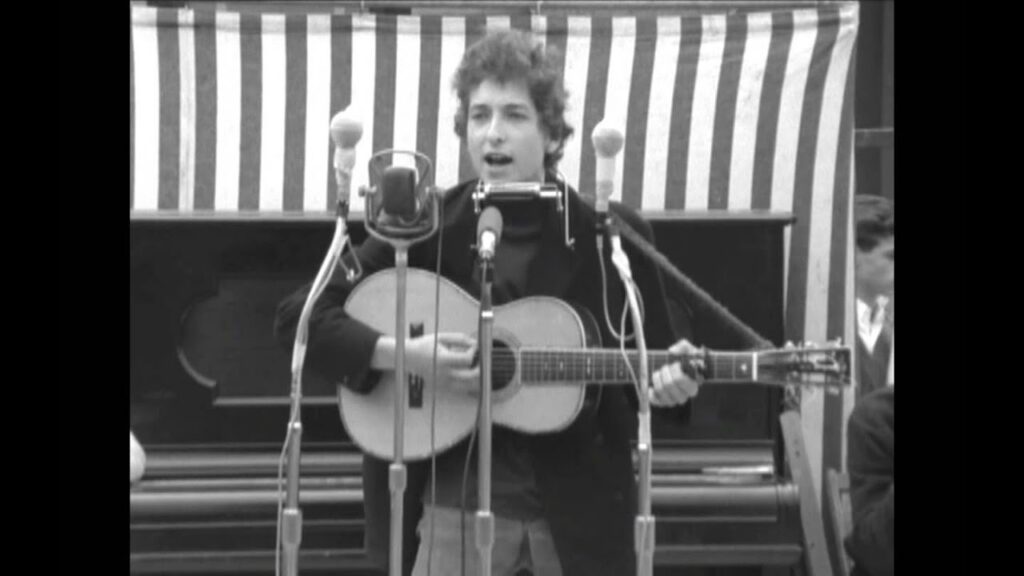
Bob Dylan’s “Knockin’ on Heaven’s Door” captures the dying breath of a man fading from war’s brutality. Its haunting simplicity turns violence into universal lament: the soldier is not an emblem of any nation but a human being confronting mortality. Rock and roll, once dismissed as rebellious noise, became a vessel for moral clarity—a cry for empathy in a world that often glorified destruction.
Global Songs of Peace and Memory
Elsewhere, cultures outside the Western world have echoed similar longings for peace through their own musical idioms. The Swedish duo ABBA, in,” sings of two revolutionaries remembering their youthful fight for freedom: “There was something in the air that night, the stars were bright, Fernando.” The nostalgia is bittersweet—idealism
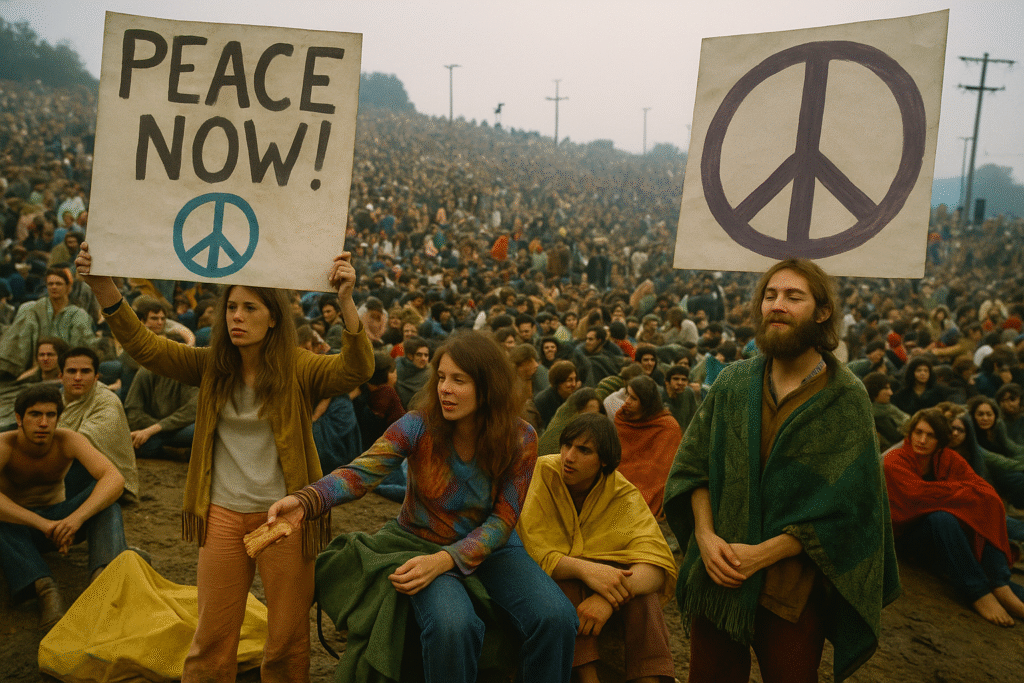
mingled with the sorrow of loss. It shows that even noble wars leave emotional scars, and that peace, once dreamed, is more precious than victory.
Matisyahu’s “One Day,” blending reggae, rock, and Jewish spirituality, crosses boundaries to express a universal yearning: “All my life I’ve been waiting for, I’ve been praying for, for the people to say / that we don’t wanna fight no more.” Its global appeal lies in its simplicity—the dream that children of all faiths might one day live without fear. Music becomes a prayer that transcends doctrine.
In India, the bhajan “Raghupati Raghava Raja Ram,” beloved by Mahatma Gandhi, embodies the same message. Sung during India’s freedom movement, it merged Hindu devotion with universal humanism: “Ishwar Allah tero naam”—God has many names. After Indira Gandhi’s assassination, when communal violence erupted between Hindus and Sikhs, ordinary people—Hindus among them—risked their lives to protect Sikh neighbors. It was a living echo of Gandhi’s teaching: religion, rightly understood, commands compassion, not revenge.
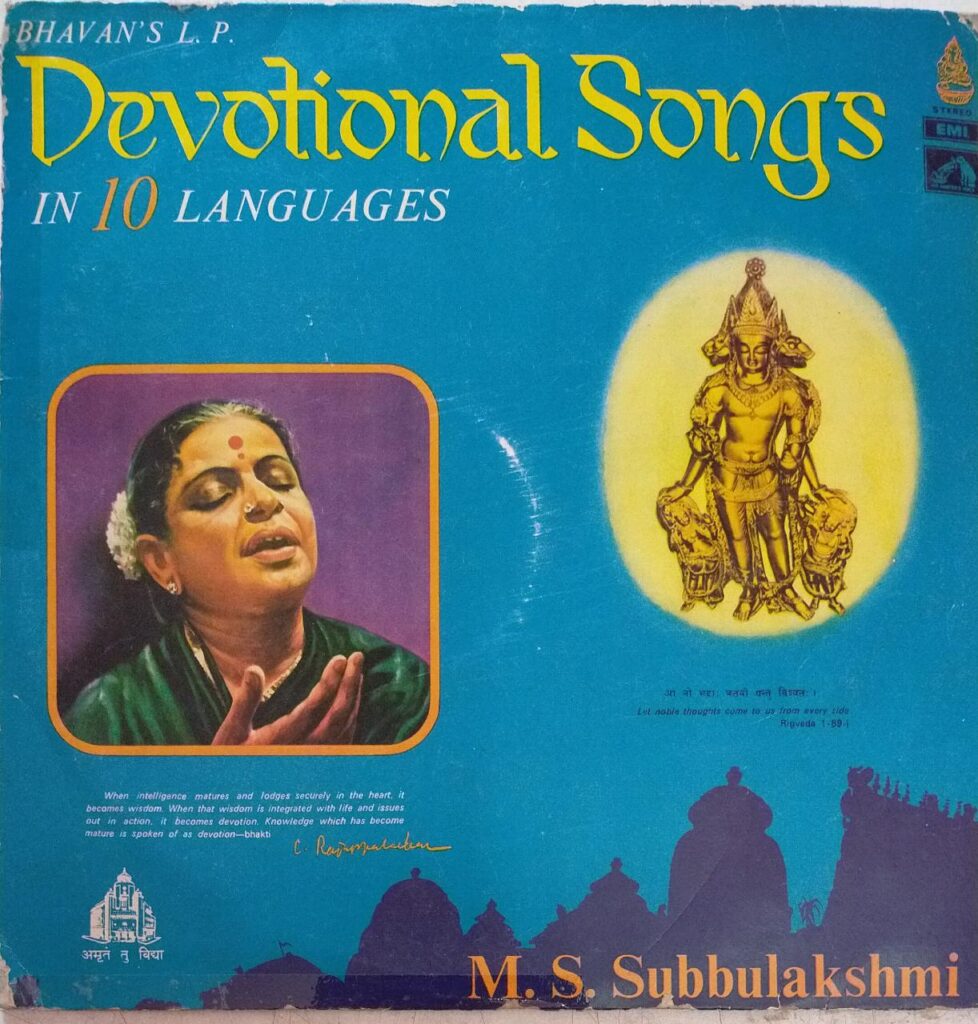
Equally transcendent is “Maithreem Bhajata,” the benedictory song composed by the sage Chandrasekarendra Saraswati and sung by M. S. Subbulakshmi at the United Nations in 1966. Performed in Sanskrit, its message is timeless: “Cultivate friendship, O mankind. Do not fight. Show compassion to the poor and the weak.” The melody, austere yet luminous, carries the serene authority of India’s spiritual heritage into a global space. In that moment, an ancient prayer for harmony became a universal anthem—reminding the world that true strength lies not in conquest, but in kindness.
Faith, Violence, and the Music of Reconciliation
Throughout history, organized religion has too often been weaponized as a justification for war and domination—from the Crusades to modern-day sectarian conflicts. The banners of faith have hidden ambitions of power, territory, and control, turning the sacred into a battlefield. What should unite humanity in spiritual purpose has too often divided it in blood. In this sense, religion—like politics—can wage a war on humanity itself when it forgets its moral center.
Yet within every faith tradition, music has offered a countercurrent of peace. Sufi qawwalis, Christian hymns, Sikh shabads, and Buddhist chants have all voiced the same truth: that the divine is found not in conquest but in harmony. Songs such as “Allah Tero Naam, Ishwar Tero Naam” (popularized by Lata Mangeshkar) directly confront the misuse of religion. They affirm that God—by whatever name—is not the author of hatred.
Bette Midler’s” extends this vision into the modern era. Its refrain—“God is watching us from a distance”—suggests a divine vantage untouched by human conflict, where borders and battles dissolve into a single, fragile planet. The song transforms theology into empathy: from afar, we are not enemies but one people yearning for peace. Just as Tolstoy’s God in War and Peace sees beyond generals and empires to the quiet heroism of ordinary lives, Midler’s song invites us to imagine that same higher harmony—where faith becomes vision, not division.
Political Power and the Economics of War
Not all wars are fought with guns. In the modern age, political and economic policies can also become weapons against the people. When leaders exploit nationalism or impose punitive economic measures—such as when U.S. President Donald Trump’s trade tariffs sparked global economic strain—they, too, wage a quieter kind of war: one fought through poverty, division, and fear. These conflicts are not measured in body counts but in livelihoods lost, communities fractured, and trust eroded. Against such injustices, protest music once again becomes the people’s voice—a demand that leaders serve humanity, not profit or pride.
Rock and Roll’s Global Mission
Rock and roll, born in the crucible of rebellion, became a global language for peace. From John Lennon’s “Imagine” to U2’s “Sunday Bloody Sunday,” musicians have transformed electric sound into moral protest. They remind us that peace is not passive—it is defiance against the normalization of violence. Each chord struck in resistance to war is, in its own way, an act of hope.
The Universal Anthem
Across time and geography, the story is the same: when guns roar, guitars answer; when faith divides, songs unite. Music reminds us that peace is not the absence of struggle, but the presence of understanding. From the Light Brigade to the battlefields of modernity, from Fernando’s nostalgic revolution to Tagore’s hymns of compassion, the melody of peace continues to play—quiet, persistent, unbroken.
Music is, perhaps, humanity’s greatest composition.
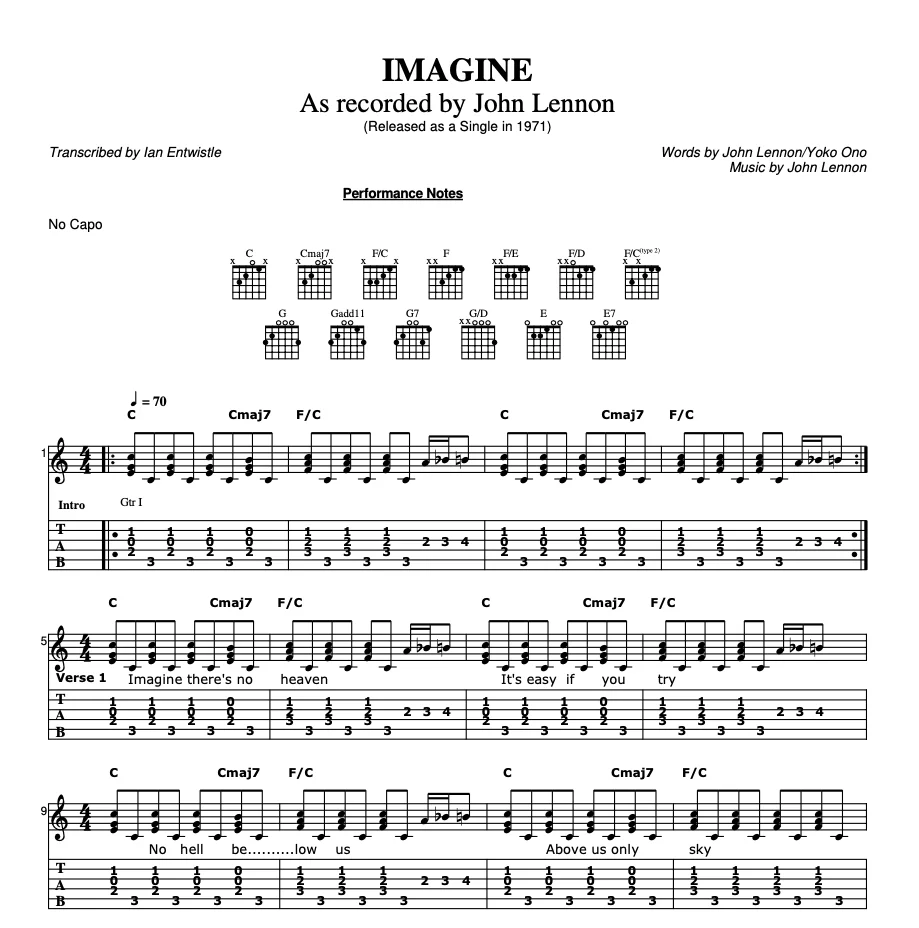
Imagine! (my all-time favorite) by John Lennon: https://youtu.be/iOs9Osz3UFQ?si=EWlT0CAROpXgRLGx
IMAGINE!
Imagine there’s no heaven
It’s easy if you try
No hell below us
Above us, only sky
Imagine all the people
Livin’ for today
Ah
Imagine there’s no countries
It isn’t hard to do
Nothing to kill or die for
And no religion, too
Imagine all the people
Livin’ life in peace
You
You may say I’m a dreamer
But I’m not the only one
I hope someday you’ll join us
And the world will be as one
Imagine no possessions
I wonder if you can
No need for greed or hunger
A brotherhood of man
Imagine all the people
Sharing all the world
You
You may say I’m a dreamer
But I’m not the only one
I hope someday you’ll join us
And the world will live as one