# Meat may have carried us through the ice age. But the future may belong to those who choose plants #
A question that stopped me cold
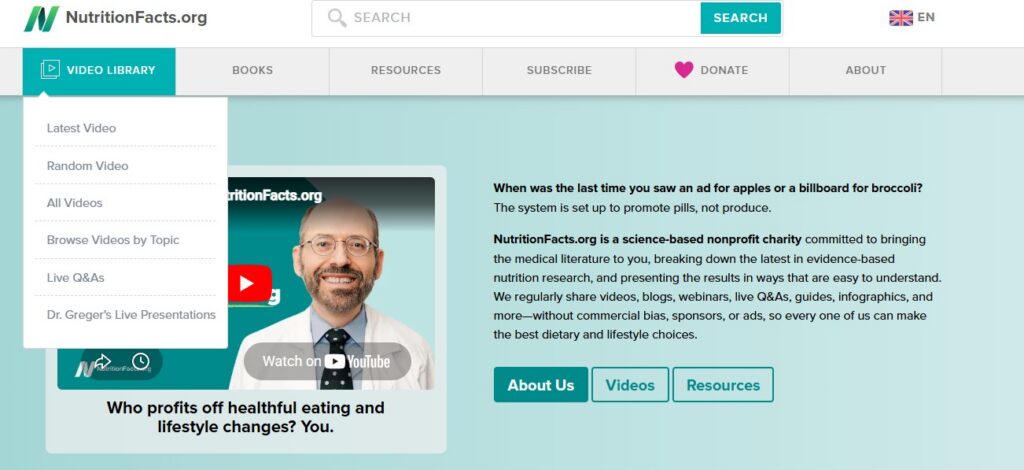
I’ve spent years reading the science behind a whole-food plant-based diet. Dr. Michael Greger’s work — double- and triple-blind studies accumulated over decades — helped me make a change that transformed my health: lower cholesterol, better blood pressure, more energy. The data was unambiguous.
Then I watched The Perfect Human Diet.
The documentary makes a compelling paleoanthropological argument: that meat, and specifically the fatty marrow of animals, was the critical fuel that caused the human brain to expand dramatically around two million years ago. Without animal protein and fat, Homo erectus might never have crossed the threshold into what we recognize as human intelligence.
For a moment, I felt genuinely unsettled. Was everything I’d come to believe — and every health marker I’d improved — built on a contradiction?
After sitting with it, I realized it wasn’t a contradiction at all. It was two different questions, answered at two entirely different timescales.
“What helped our ancestors survive is not the same question as what helps us thrive.”
The baton that meat carried
The paleoanthropologists are not wrong. The archaeological and fossil record strongly suggests that increased access to meat, marrow, and cooked food coincided with a period of extraordinary brain expansion in our evolutionary lineage. Researcher Richard Wrangham’s “cooking hypothesis” adds another layer: that cooking food — including meat — dramatically increased caloric bioavailability and may have freed up the energy needed to grow and sustain larger brains.
DHA, an omega-3 fatty acid abundant in fatty fish and animal tissue, is a structural component of brain tissue. The argument that early access to DHA-rich foods accelerated cognitive development is biologically coherent and scientifically respectable.
In other words: meat carried the baton through the most grueling legs of the human relay — ice ages, scarcity, predator-rich environments, the slow climb from survival to civilization. It was the right fuel for that era. Evolution needed us to reproduce and persist, and meat delivered the calories and nutrients to do exactly that.
Key distinction
This is an argument about evolutionary history — what got us here — not about optimal nutrition for the human lifespan we actually live today. These are fundamentally different questions.
Evolution doesn’t care about your eighties
Here is the uncomfortable truth about natural selection: it is ruthlessly indifferent to anything that happens after you have successfully reproduced. Evolution optimized our ancestors to survive long enough to pass on their genes — full stop. Quality of life at 70, arterial health at 60, cognitive sharpness at 80: none of this was in evolution’s job description.
This is precisely where the clinical evidence that Dr. Greger and others have compiled becomes so important. The question it answers isn’t “what diet helped humans evolve?” It’s “what diet helps a modern human live well for as long as possible, with the lowest rates of heart disease, cancer, diabetes, and cognitive decline?”
On that question — the question that actually governs our lives — the evidence increasingly points toward whole-food, plant-based nutrition.
The two documentaries aren’t in conflict. They are answering entirely different questions, set millions of years apart.
The evolutionary relay race
Think of human dietary history as a relay race across deep time. Each runner was right for their era. Each handed the baton forward so the next runner could begin.
~2 million years ago
Increased access to meat and marrow likely accelerated brain expansion in early Homo. This was the critical leg — survival, reproduction, cognitive ignition.
Ice ages & scarcity
Animal foods provided dense, reliable calories during periods when plant foods were scarce or unavailable. Metabolic flexibility — the human ability to thrive on diverse diets — was selected for.
Agricultural revolution
Plant foods returned to the center of most human diets. Many of history’s most enduring civilizations were built on grain-, legume-, and vegetable-heavy eating patterns.
Today
For the first time in history, chronic disease — not predators or famine — is the primary threat to human longevity. The selection pressure has fundamentally changed.
We are now running a different leg of the race entirely. The threats have changed. The finish line has changed. And the evidence suggests that the diet best suited to this leg looks quite different from the one that carried us through the last.
DHA, without the detour
One practical note worth addressing: if DHA was so important for brain development, doesn’t a plant-based diet leave us deficient?
Not necessarily. The body can convert ALA — found in flaxseed, chia, walnuts — into DHA, though the conversion rate is modest. More directly, algae-based DHA supplements bypass the animal intermediary entirely. Fish don’t manufacture DHA; they accumulate it from algae. We can simply go to the source. For those on plant-based diets, algae-derived DHA is worth considering as a direct and elegant solution.
My lineage, and what it tells us
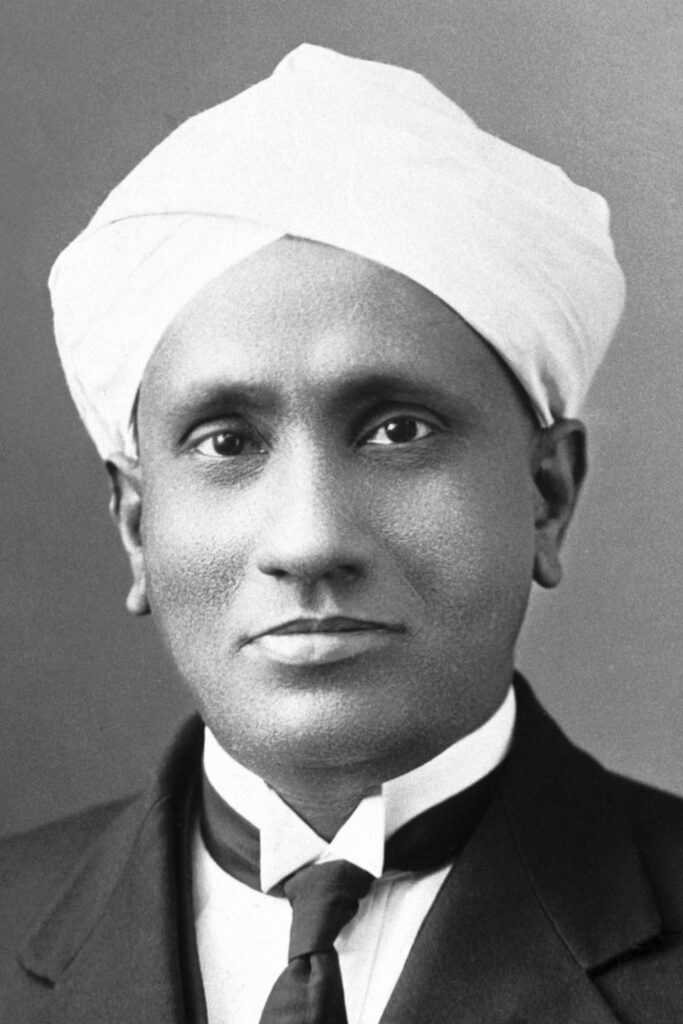
I don’t have DNA evidence to prove a direct bloodline. But I come from the same Tamil Iyer Brahmin community that hailed from Tanjore — a community that produced, across generations, some of the most extraordinary scientific and intellectual minds the world has seen. All of them vegetarian. All of them, by the standards of any era, are flourishing.
That shared community is its own kind of lineage — not of genes, perhaps, but of values, practice, and living proof. And I no longer think it’s coincidental. They join a remarkably distinguished list:

Albert Einstein, Nikola Tesla, Leonardo da Vinci, Mahatma Gandhi, Pythagoras, Isaac Newton, Franz Kafka, Leo Tolstoy, Dr. C.V. Raman
These were not people diminished by the absence of meat. They were people who demonstrated, across their lifetimes, that a plant-based diet is entirely compatible — perhaps even synergistic — with sustained intellectual achievement and long productive lives.
If cognitive flourishing and longevity are the new selection pressures in a post-scarcity world, then plant-based lineages may literally be the ones that persist and thrive most visibly.
“Future generations won’t thank their ancestors for surviving the ice age. Evolution already handled that. They may thank them for keeping their bodies sharp into old age, and leaving a planet worth inheriting.”
The reconciliation
Here, then, is how I hold both truths at once — and I hold them without tension:
Meat may have been necessary for our ancestors to survive long enough to reproduce and build civilization. The paleoanthropologists are right about this, and it’s a remarkable chapter in our story.
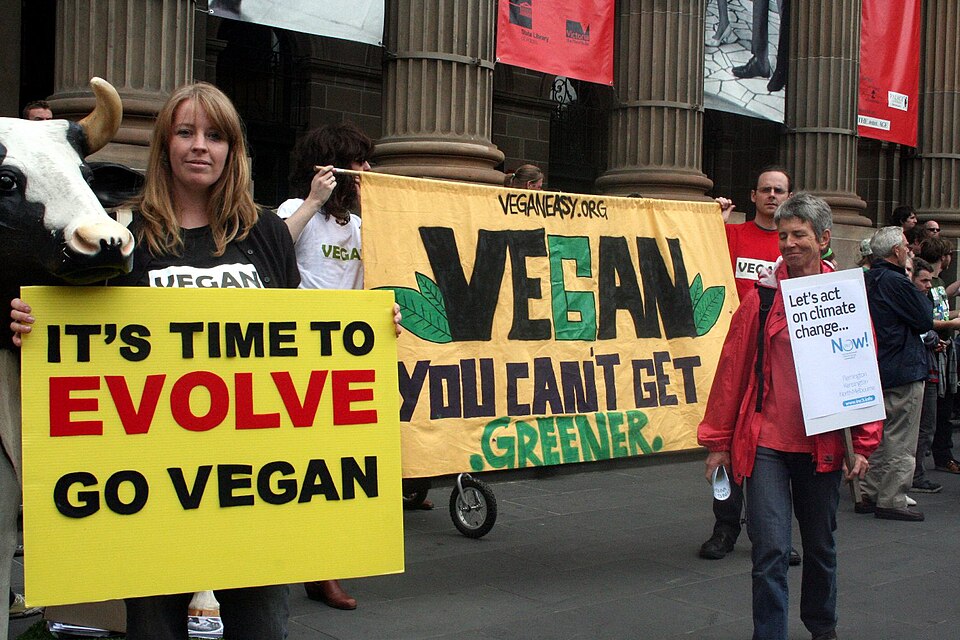
But the descendants who live longest, with the clearest arteries and the sharpest minds, may well be the vegans and vegetarians of today. The clinical researchers are right about this too.
One is evolutionary history. The other is lived health. They operate at different scales, answer different questions, and are both true simultaneously.
My cholesterol is down. My blood pressure is down. My energy is steady. Decades of peer-reviewed evidence are pointing in the same direction. And I come from a line of brilliant minds who never needed meat to think clearly or live fully.
The ice age is over. We are running a new leg of the race now — and we get to choose what fuel we carry.
The baton is yours.
What you eat today is not just a personal health choice. It is a small act of authorship on the next chapter of the human story.