Nigel Farage quit Parliament this week. Then immediately asked to be let back in!
Note: I live in the US. American politics is, of course, happening. Loudly. Constantly. In every direction. And yet here I am, reading about a man in Essex who quit his job to apply for the same job. I have no explanation. Sometimes the circus across the Atlantic just has better clowns.
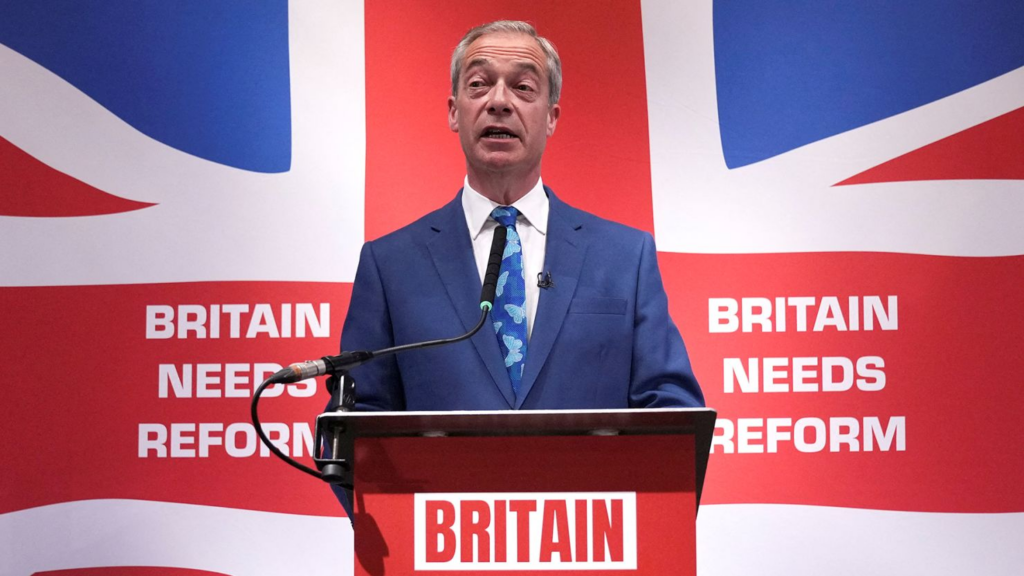
Sit with this for a moment! Nigel Farage, the leader of Britain’s right-wing Reform UK party, announced this week that he will step down from parliament to fight a “people versus the establishment” special election. The same seat. The same constituency. He is resigning to run again.
This is the political equivalent of dramatically storming out of a restaurant, then coming back to order dessert.
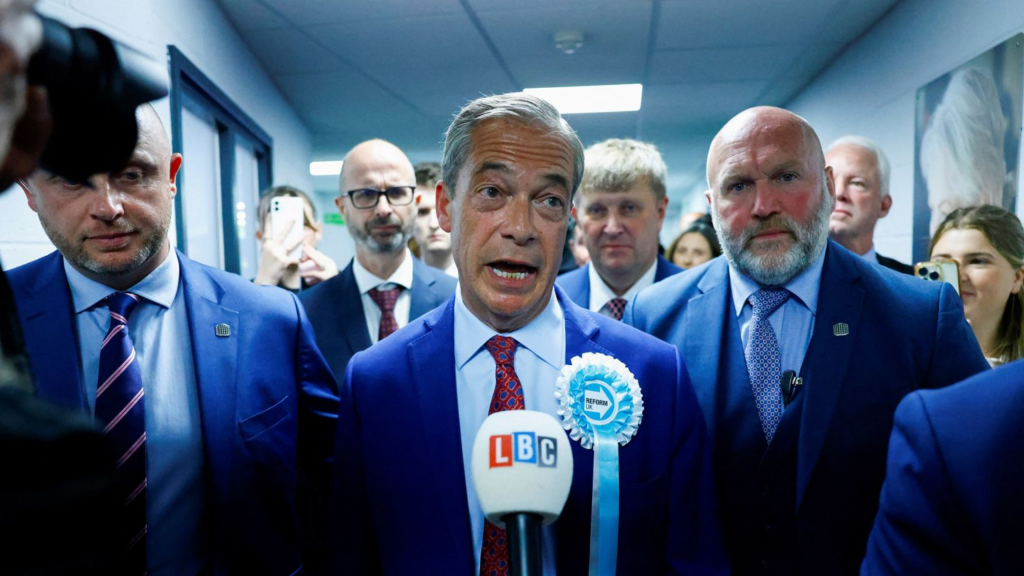
The parliamentary standards commission was already investigating Farage for accepting five million pounds — roughly $6.8 million — from cryptocurrency billionaire Christopher Harborne, a gift Farage initially said would fund his private security. There were also questions about undeclared donations from one George Cottrell, a convicted fraudster who provided him with financial and security support before his election to Parliament. When you have two separate funding scandals running simultaneously, most people call a lawyer. Farage called a press conference.
The surprise move appears to be an attempt to tackle recent negative press reports regarding the source of his personal wealth — and conveniently, the parliamentary probe will be suspended until he is re-elected. If he loses the by-election, the standards commissioner will decide whether to resume the investigation. Clever. Audacious. Completely on brand.
Trump appeared to back Farage on Monday, posting an article on Truth Social headlined “They’re Running the 2024 Anti-Trump Playbook on Nigel Farage.” The two men have had a complicated relationship lately — Farage failed to secure a meeting with the president when he travelled to Mar-a-Lago in March — but nothing bonds populists quite like a shared persecution narrative.
The reaction from every other party was a masterclass in British understatement. Labour called it a “desperate stunt.” The Conservatives called it a “hissy fit.” The Liberal Democrats said they would not be putting forward a candidate in what they called a “fake by-election.” All three parties refusing to stand against him is either a principled stand or a spectacular miscalculation — British political history will decide which.
Here’s what makes this genuinely interesting beyond the spectacle: Reform UK currently holds just eight of 650 parliamentary seats, but has been leading in opinion polls, and Farage is now viewed as a favourite to be the next prime minister. In May, Labour lost heavily to Reform in elections in Wales and Scotland, and in 136 local council elections in England. The man is scandal-adjacent, cryptocurrency-funded, and currently more popular than the sitting government.
Whether that says more about Farage or about Britain in 2026 is a question best left to the historians. And perhaps the standards commissioner — if he wins.
Sources: CNN, CNBC — July 11, 2026