There are musicians whose names fill arenas, whose faces land on album covers, whose egos arrive a few minutes before they do.
And then—there is Phil Kenzie.
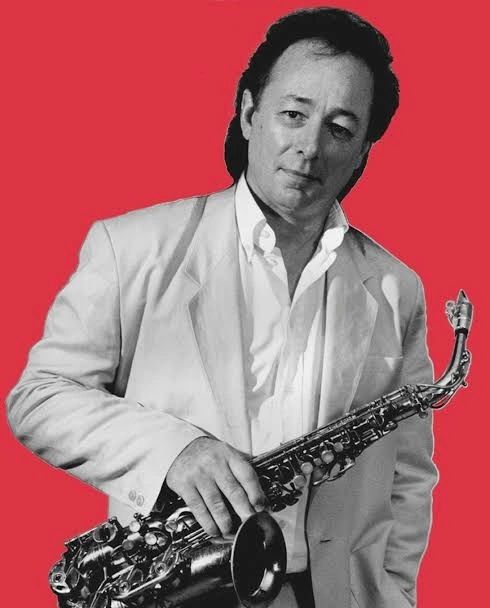
The man doesn’t need a spotlight; he is one — warm, gold-lit, illuminating everything around him without ever demanding to be the centre of it
Most people don’t realize how many of their favorite musical moments entered the world through Phil’s breath—his tone, his instinct. But anyone who has ever been arrested mid-thought by that soaring sax line in Year of the Cat has already been inside Phil Kenzie’s world — they just didn’t know whose door they’d walked through. Because that solo isn’t just played—it speaks. It unfurls like a silk ribbon in slow motion, telling a story that didn’t exist until Phil told it.
When Al Stewart was recording Year of the Cat, he initially resisted adding a saxophone. Alan Parsons, ever the visionary, suggested they try it. Al hesitated—and then relented. What followed was pure magic. Phil’s sax line, fluid and deeply expressive, lifted the song into another realm altogether. The magic didn’t stop there. On Stewart’s follow-up album, Time Passages, Phil once again brought his lyrical mastery, sculpting an instrumental passage that felt both delicate and expansive—suspending the listener between nostalgia and forward motion.
What few people know is just how improbably that magic came to be.
By training and reputation, Phil was a tenor saxophonist. Yet on Year of the Cat, he played alto sax—an instrument that wasn’t even meant to be part of the equation. In a twist worthy of the song’s mystique, Phil had discovered a 1939 vintage alto saxophone barely an hour before Alan Parsons called him to play on the track. Almost as if fate itself had nudged the horn into his hands, that unexpected alto became the voice of one of the most iconic solos in rock history—pure alchemy in sound.
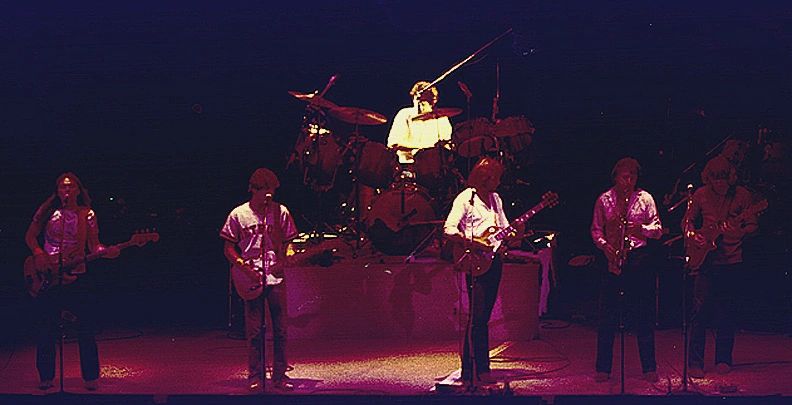
Phil Kenzie’s greatness was never confined to studio perfection or chart success. It lived in his constancy. For decades, he has been a cornerstone of The Rocky Horror Show, playing in its band since the production’s very inception. Night after night, year after year, Phil brought the same commitment and sparkle to live theater as he did to legendary recordings—proof that artistry isn’t about the size of the stage, but the sincerity of the sound.
And yet, Phil’s greatness isn’t only in his solos.
Born in Liverpool, he cut his teeth in the vibrant British music scene, even sharing stages with The Beatles in his early years. Over a storied career, he has worked with an astonishing range of artists. In the studio, he played alongside The Beatles and Paul McCartney on Band on the Run. On the American side of the Atlantic, his saxophone found its way onto records by The Eagles, Tom Petty, Stevie Nicks, and Kenny Loggins. And somehow, in between, he also made time for David Bowie, Carly Simon, Rod Stewart, and Graham Nash, The Beatles, The Eagles, Graham Nash, Carly Simon, Rod Stewart, David Bowie, Alan Parsons, Vince Gill, Stevie Nicks, Tom Petty, Kenny Loggins, the Pointer Sisters, and many others. As a session musician, his saxophone appears on Let It Be by The Beatles, Paul McCartney’s Band on the Run, Roger Daltrey’s solo albums, Poco’s Legend, and—most memorably—Al Stewart’s recordings. His saxophone has appeared on recordings by The Beatles, The Eagles, David Bowie — and sixteen other artists whose combined record sales could fill a small country. Remarkably, nineteen gold and platinum albums bear his fingerprints, even if his name rarely appears on the cover.
In January 2015, he launched his S.O.S.S. (Save Our Sax Solo) tour in Boca Raton, Florida, advocating for the preservation of the saxophone’s voice in rock music. He also released an instrumental album, A Night with the Cat, recorded over more than a decade, as a tribute to his work—especially his enduring musical partnership with Al Stewart. While maintaining a busy schedule of film, TV, and recording dates, he has expanded his activities into songwriting and the production of his first album, “Unsafe Sax”.
Phil has always been humble—never flashy, never self-aggrandizing—but his horn speaks volumes. He knows precisely when to step back and exactly when to tear open the sky. That discernment is its own kind of genius.
So here’s to the man behind the horn.
His notes hang in the air of our lives—bright, searching, impossibly alive. Because brilliance like his doesn’t fade.
It echoes!
—
If you’ve never heard what I mean, start here:
Further reading: For more about his life and career, see his Wikipedia page.
Year of the Cat, YT (1:59-minute mark): https://youtu.be/2i46s52JAUE?si=dK2rqX1a41ThAnqA
Time Paxsages, YT (starting at 19 seconds): https://youtu.be/QQD-OvbCfCU?si=j0gvJj3nUCVjuYTU