Nobody warned me about the knees.
They warned me about plenty of other things. Grey hair — yes, extensively. The general direction of gravity — implied but not stated outright- is a form of false advertising. The reading glasses that multiply like rabbits until there is a pair in every room and none of them where you actually need them. All of this I was briefed on, however inadequately.
But the knees. Nobody mentioned the knees.
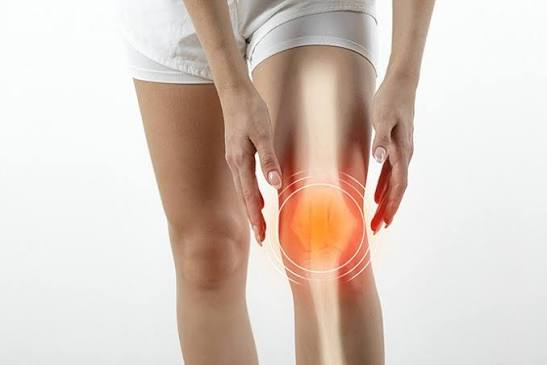
One morning you wake up, and your knees have apparently filed for independence. They have grievances. They have opinions about staircases. They issue formal complaints about certain yoga poses that you were doing perfectly well six months ago, and they are not interested in negotiation. You try reasoning with them. You try ignoring them. You try glucosamine, which tastes like ground-up good intentions, and which your knees accept with polite indifference.
And then there are the shoulders. Nobody mentioned those either. They have begun a slow, unauthorised migration forward — a gentle but persistent slouch that my mother would have corrected with a look. I catch myself in shop windows sometimes and think: when did I start looking like I am trying to read something very small at waist height? I straighten up. Ten minutes later, the shoulders file their own grievance.
This is growing old. It arrives not with a bang but with a creak — and occasionally a slouch.
Growing up, on the other hand, is a different matter entirely.
The biological kind runs on a fixed schedule. Your body keeps its appointments with ruthless punctuality. My hair started its programme some years ago and has been proceeding with the quiet confidence of something that knows it is winning. Silver, I tell myself. Distinguished. The hair of someone who has read a great many books and survived a great many things and cannot be bothered anymore.
The other kind of growing up — the interior renovation — runs on no schedule whatsoever. It arrives sideways. It surprises you at my age with lessons you apparently needed in your thirties but were too busy for. It is, frankly, inconsiderate.
What no one tells you about old age:
You start doing the things you actually want to do.
This sounds obvious. It is not. For most of your adult life, doing what you want exists in constant negotiation with what is appropriate, what is productive, and what the version of yourself you aspire to be would choose. Every day belonged to someone. Every morning was pre-allocated before you had finished your first cup of tea.
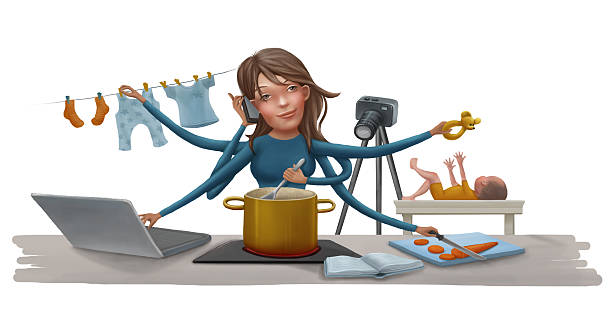
And underneath all of it — invisible but load-bearing — was the architecture of family. Making sure there was a meal on the table that everyone would actually eat, which is its own advanced degree. Making sure the homework was done, checked, and done again because the first attempt was optimistic at best. Making sure the doctor’s appointment was scheduled, the permission slip was signed, and the thing that needed to be bought for the thing that was happening tomorrow was bought today because tomorrow would be too late. None of this appeared on any official job description. All of it consumed the spontaneity budget entirely before spontaneity even had a chance to raise its hand.
The working mother’s calendar was not a calendar. It was a hostage negotiation conducted in fifteen-minute increments, in which the hostage was always yourself and the negotiators were always winning. You learned to be efficient. You learned to be present in five directions simultaneously. You learned, above all, to defer — to push the thing you wanted to do to the weekend, to next month, to when things calm down, to some unmarked future date that kept moving forward as you walked toward it.
Things did eventually calm down. It just took longer than anyone said it would.
Now I can decide at 9 AM to go hiking and be on the trail by 10. No calendar to clear. No series of meetings to reschedule with their attendant emails and apologies, and finding a slot that works for everyone, which it turns out never really works for everyone. I can decide at noon to spend the afternoon doing dishes at the local temple and — go. The day is mine to spend as the day requires, not as some schedule negotiated three weeks ago by a version of me who did not yet know what this particular Tuesday would need.
This is not a small thing. This is, in fact, enormous.
And at my age, most of the negotiations about how to spend your time quietly close. The mediators go home. What remains turns out to be remarkably similar to what you wanted at eight.
I want to read. Not improving literature selected for its cultural significance — though I have done my time with that and have the marginalia to prove it. The mysteries that pull me now are of a different order entirely. Where did we come from? Not the tidy answer, but the real one — the one that keeps shifting every time someone digs something up in a cave in Morocco or sequences ancient DNA from a tooth. The one where our tidy human family tree turns out to be less a tree and more a heavily revised manuscript with several authors who disagreed with each other. I want to know what happened 300,000 years ago and why nobody can quite agree, and I find this considerably more gripping than most fiction.
And then there is the cosmos. The kind of reading that starts with a question like what is dark matter and ends three hours later with you staring at the ceiling wondering whether anything is real, which is either a sign of a very good book or a very bad one, and I have decided it is the former. Quantum physics specifically — the branch of science that dares to suggest that particles exist in multiple states simultaneously until someone looks at them, which is either the most profound thing ever discovered about the universe or an elaborate joke at humanity’s expense. Possibly both. I am reading everything I can find on this subject and understanding approximately sixty percent of it, and finding the other forty percent even more interesting for being just out of reach.
I have read more on human origins, deep time, and the fundamental nature of reality in the past two years than in the preceding five decades combined. I have zero regrets and several new questions for everyone I have answered, which, at my age, feels exactly right.
I want to do puzzles. Cryptic crosswords specifically — less a pastime and more a contact sport conducted entirely in one’s own head. There is something deeply satisfying about a cryptic crossword. It rewards exactly the kind of oblique thinking that I spent most of my professional life being described as not quite what we were looking for. The cryptic crossword considers this a feature.
I want to learn things with no practical justification. I have spent considerable recent time learning AI tools — which, at my age, I am apparently not supposed to find interesting. I find them fascinating. The irony of using artificial intelligence to become more authentically myself is not lost on me. I am leaning into it anyway.
And I want to laugh at myself. Freely, frequently, without the protective layer of self-consciousness that spent several decades making this difficult. The knees are funny. The shoulders are funny. The reading glasses situation is objectively funny. The fact that I have genuine opinions about the best brand of non-dairy yoghurt and will share them unprompted — also funny.
Here is what I think happened:
Growing old stripped away the scaffolding.
For most of adult life, we are held upright by an elaborate structure of external supports — career identity, social roles, the opinions of people we are trying to impress, the exhausting project of becoming the person we think we should be. The scaffolding is useful. It gets things built. But it is also, if you are honest, somewhat crushing.
Then various things happen — time passes, knees file grievances, shoulders begin their forward migration, hair makes its editorial decisions — and the scaffolding comes down. Piece by piece, with occasional dramatic crashes. And when enough of it is gone, you discover something unexpected.
The building was fine without it.
What growing up actually looks like, from the inside:
It looks like Monday morning with a cryptic crossword and an exceptionally good cup of tea and nowhere to be.
It looks like picking up a mystery novel at 8 PM, knowing you will read until 10 PM, and making the decision anyway because you have earned the eye bags.
It looks like deciding on impulse to hike a trail you have never done before, because it is a beautiful morning and there is nothing — truly nothing — stopping you.
It looks like laughing at yourself in the middle of explaining to an AI exactly what you want and realising it is being more patient with you than you have been with yourself for most of your life.
It looks, in other words, remarkably like childhood. The unhurried kind. Before anyone told you what you were supposed to want.
Nobody warned me about this part either.
That somewhere on the other side of the knees and the silver hair and the shoulders conducting their slow forward rebellion — somewhere past the scaffolding coming down — there is something that feels, improbably and stubbornly, like freedom.
Not the freedom of youth, which is really just the freedom of not yet knowing what is coming. Something better. The freedom of having been through quite a lot and discovering that you are still here, still curious, still capable of being genuinely delighted by a well-constructed cryptic clue or an unreliable narrator or a trail you have never hiked before or an AI tool that does exactly what you asked.
Growing old is not for sissies. But neither, it turns out, is growing up. The second one just takes longer.
Comments
One response to “Growing Old Is Not For Sissies — But Neither Is Growing Up”
You have hit the nail on the head . Love your blogs ! My routine starts with a cup of coffee and reading your blogs at 7 am 🙂